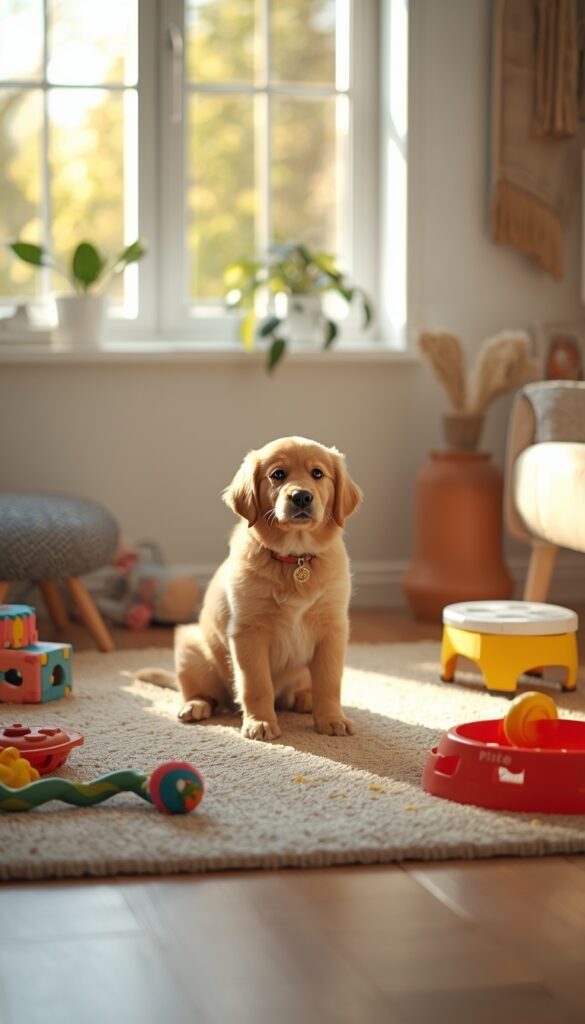
The natural first response to a destructive puppy is to puppy-proof everything. Move the cords. Lock the cabinets. Baby-gate the staircase. Put the nice rug in storage. If you’ve been down this road, you know it works up to a point — and then your puppy simply finds something new to redirect their energy toward, usually something you forgot to protect.
The missing piece isn’t more restrictions. It’s more intentional space. Puppies wreak havoc when they’re bored, understimulated, or simply have nowhere specific to direct all that energy. Give them a designated place to play, a quiet corner to wind down, a spot to figure out a puzzle — and the chaos level drops noticeably.
I learned this the hard way after my puppy found her way behind the refrigerator at 9 AM on her third day home. Once I stopped trying to block everything and started building her actual spaces to use, our whole household rhythm changed. She was calmer. I was calmer. The throw pillows remained intact.
Here are 10 indoor puppy area ideas you can set up without major renovations, big budgets, or any particular design talent. Take the ones that fit your space and your pup’s personality, and start with just one or two.
Quick Overview: All 10 Indoor Puppy Area Ideas
Not sure where to begin? Here’s a snapshot of all 10 setups so you can pick the right starting point for your home:
| Area Idea | Best For | Setup Effort | Approx. Cost |
| Play Zone with Toys | All breeds, all ages | Low | $–$$ |
| Nap Corner | Anxious or overtired pups | Low | $ |
| Climbing Structure | Active, confident pups | Medium | $$ |
| Baby Gates | Curious explorers | Low | $–$$ |
| Training Area | All puppies | Low | $ |
| Indoor Obstacle Course | High-energy breeds | Low (DIY) | Free–$ |
| Puppy-Friendly Layout | Destructive chewers | Medium | $ |
| Water Play Station | Warm climates, water breeds | Low | $ |
| Sensory Exploration Area | Shy or anxious pups | Medium | $–$$ |
| Bedding Spot | Every single puppy ever | Low | $–$$ |
Table of Contents
1. Create a Puppy Play Zone with Toys
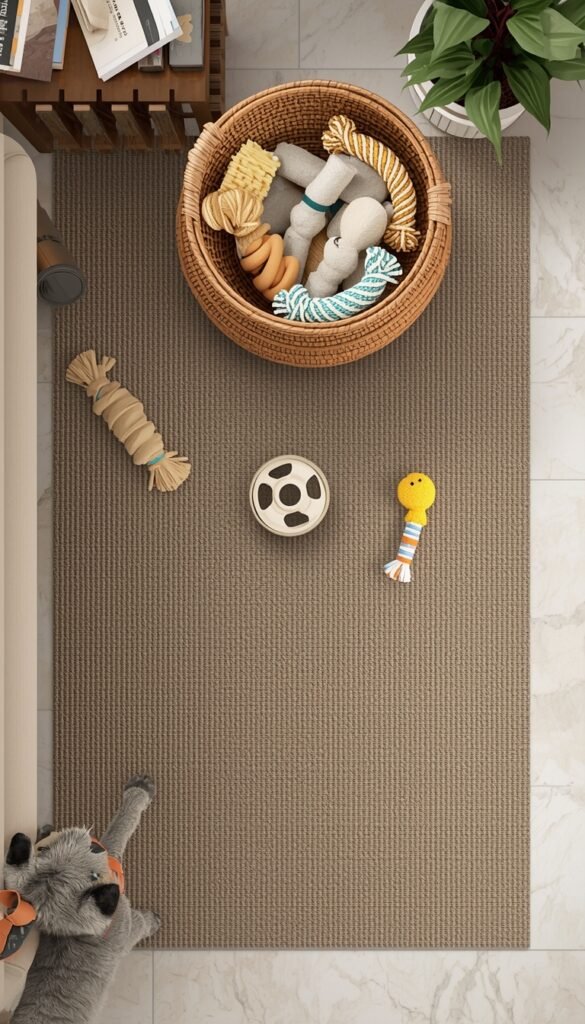
Give the chaos a home base
The single fastest way to improve puppy behavior indoors is to give them a clearly defined space where playing is the whole point. Not a general “anywhere except the furniture” rule — an actual, physical spot with a mat, a boundary, and a rotating selection of toys that’s reliably theirs.
Variety is what makes this work. A rubber chew toy, a ball, a puzzle feeder, and a soft resting mat cover most of the bases. Swap out two or three toys every few days so the zone stays interesting instead of becoming background furniture your puppy walks past.
The puzzle feeder alone is worth the investment. According to the American Kennel Club, mental stimulation is just as tiring for puppies as physical exercise — sometimes more so. A good puzzle feeder can keep a puppy occupied for 20 solid minutes and take the edge off enough that the rest of the afternoon is noticeably quieter.
- Rubber or rope chew toys
- Puzzle feeder for mental stimulation at mealtimes
- Soft foam play mat or interlocking tiles to define the zone
- One or two squeaky toys for auditory engagement
- A small basket to collect toys at the end of the day
2. Set Up a Cozy Puppy Nap Corner
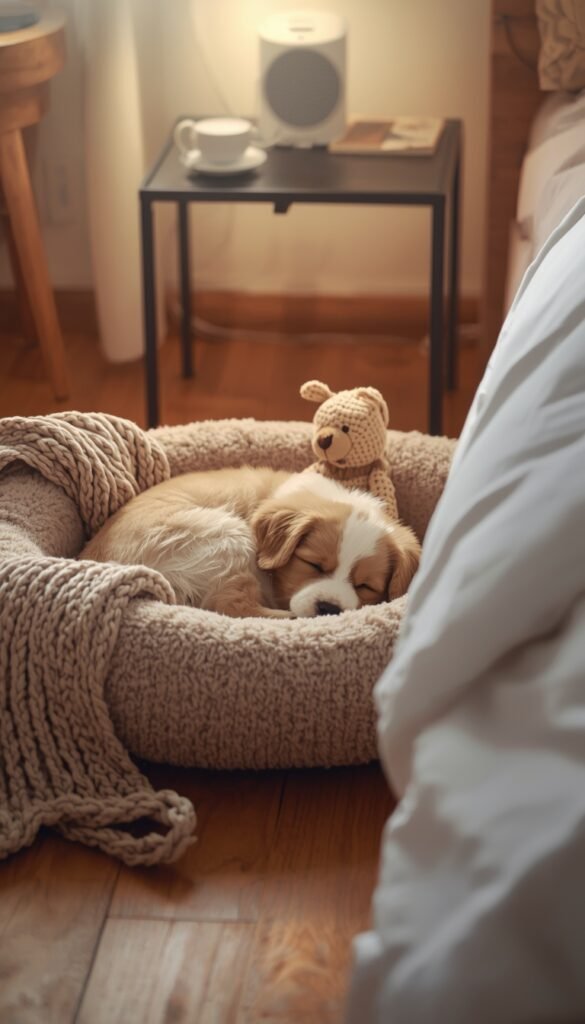
Because even tiny tornados need rest
After a solid play session, puppies need somewhere specific to decompress — and “just lying down somewhere” doesn’t give the brain the signal that it’s time to actually rest. A dedicated nap corner does. It becomes a cue: this place means calm.
Choose a spot away from household foot traffic and noise. A well-padded dog bed or a folded blanket in a low-sided crate works well. Add a toy or piece of worn clothing with your scent — familiar smells genuinely reduce anxiety in young dogs. Soft lighting and, for particularly sensitive pups, a white noise machine nearby can make the whole setup significantly more effective.
Pet Mom Tip: The nap corner works best when you never move it. Puppies build associations with specific locations quickly, and consistency is what makes this a reliable wind-down cue rather than just another spot on the floor. Pick a corner, commit to it, and resist the urge to tidy it away between uses.
3. Install a Puppy Climbing Structure
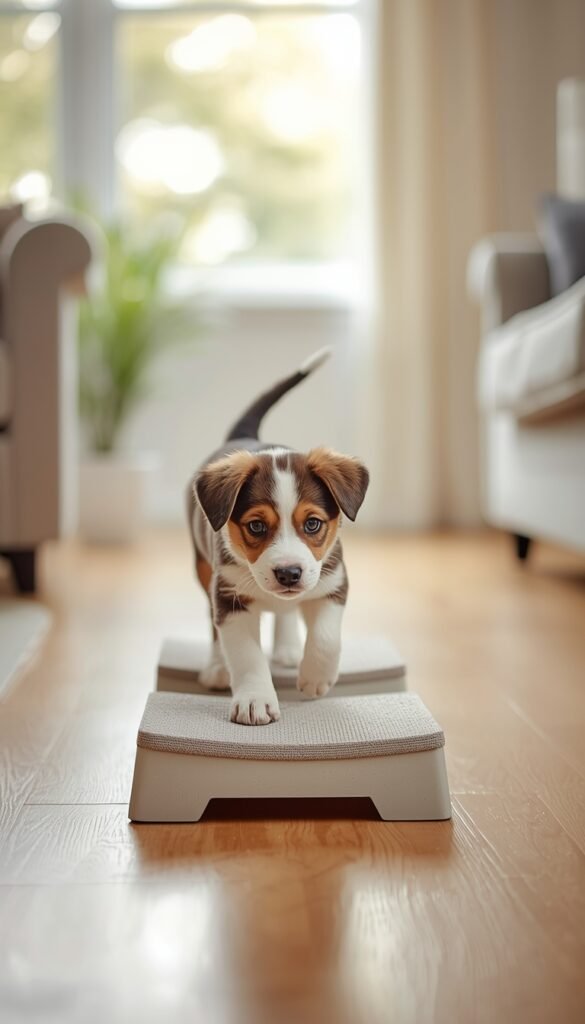
Small dog, big ambitions
Climbing structures aren’t only for cats. Low-level foam ramps, small agility steps, and textured platforms give puppies an outlet for their instinct to scramble onto things — ideally before they decide your couch arm is the perfect climbing target.
The benefits go beyond entertainment. Navigating different heights and surfaces builds coordination, body awareness, and genuine confidence. Soft foam platforms with rounded edges and stable bases are all you need to start. Supervise the first few sessions to read how your puppy handles height and surface changes — most take to it immediately and keep coming back.
4. Use Baby Gates for Safe Spaces
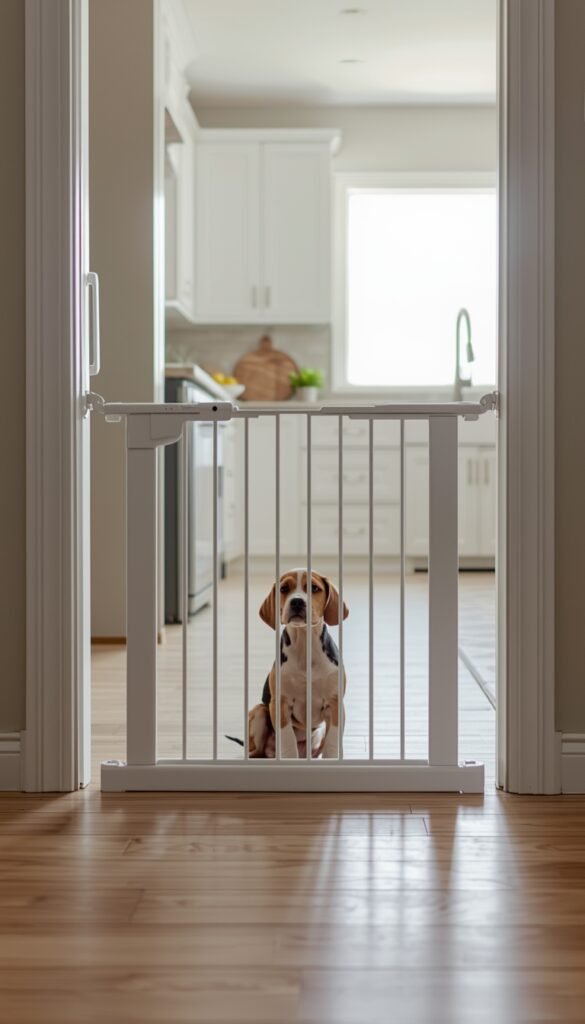
The unsung hero of puppy parenting
Baby gates are one of the most cost-effective puppy investments you can make — considerably cheaper than replacing furniture that got chewed while you weren’t watching. They allow your puppy to move freely within a defined area without requiring constant supervision.
Use them to secure the kitchen, block stairways, or section off rooms where you don’t want unsupervised access. Most pressure-mounted gates install without tools in a few minutes. If you need flexibility across multiple doorways in the house, look for adjustable-width models that move with you rather than requiring a separate gate for every opening.
5. Designate a Puppy Training Area
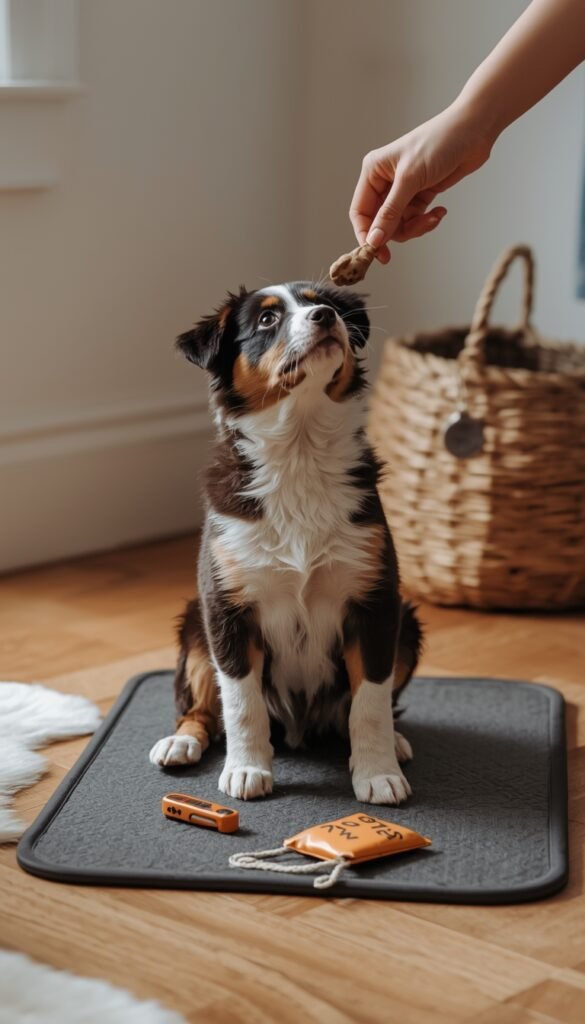
Consistency is everything
Here’s something many new puppy owners don’t realize until a few months in: training in the same spot every time is significantly more effective than training wherever you happen to be standing. Puppies learn associations fast. When a specific corner consistently means treats, a clicker, and focused attention, they start settling into learning mode as soon as they arrive there.
Keep training supplies in a small basket in that corner — a treat pouch, a clicker, a reward toy, a non-slip mat so your pup doesn’t slide around during sits and downs. Sessions should stay short. Five to ten minutes is the sweet spot for puppies; beyond that, attention fades and the session stops being productive. Always finish on a success, even if it means ending with something easy.
If you’re just starting out, MomPaw’s guide to building a puppy routine covers how to structure training sessions within a full daily schedule so it doesn’t feel like a separate task you have to carve time out for.
6. Include an Indoor Obstacle Course
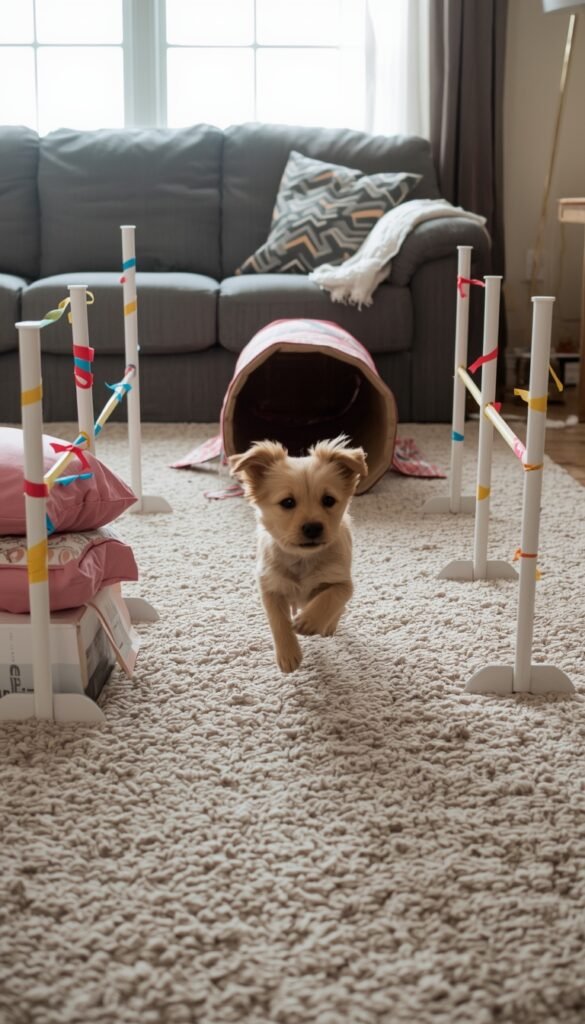
You don’t need fancy equipment for this one
An indoor obstacle course sounds like a project. It really isn’t. You can build a solid beginner course entirely from things you already own: two couch cushions stacked as a jump, dining chairs arranged for weave poles, a cardboard box as a tunnel, a folded blanket as a pause table. You just built an agility course for free.
The payoff is real. Navigating an obstacle course tires a puppy out far more efficiently than running laps — it demands focus, coordination, and decision-making all at once. Run through it together two or three times a week and you’ll notice your puppy’s body awareness and general trainability improving alongside their confidence.
7. Build a Puppy-Friendly Furniture Layout
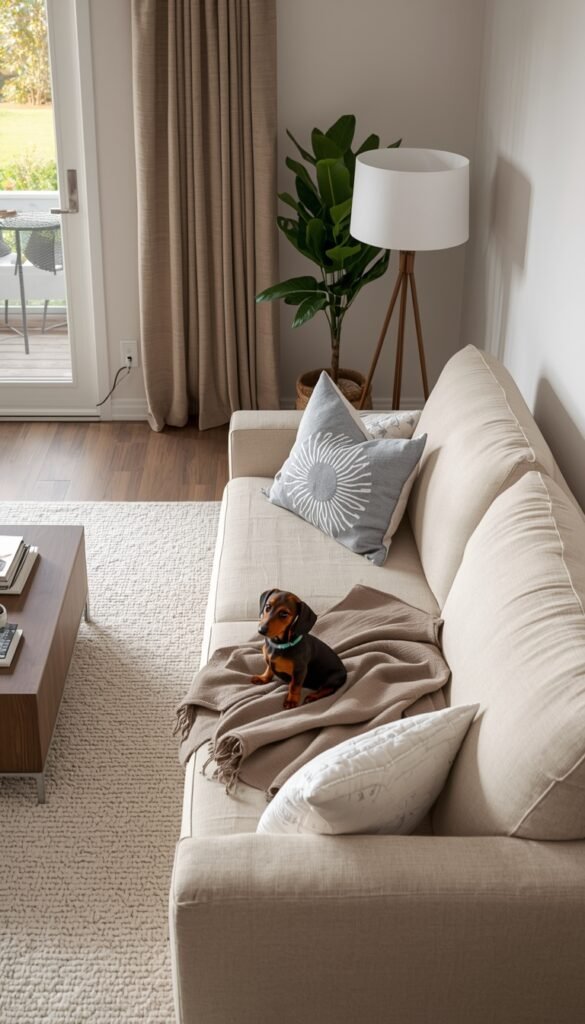
Small tweaks, big difference
You don’t need to redecorate. You need to look at your space at puppy level and remove the obvious hazards — exposed cords, unstable items, sharp corners they can collide with — and create a layout that’s genuinely easy to navigate for a small dog who hasn’t quite mastered stopping yet.
Washable slipcovers on sofas and chairs save significant stress if your puppy is allowed on furniture. Designating a specific throw rug as “puppy territory” in shared spaces gives them a clear landing zone. Moving a coffee table six inches can open up floor space that becomes a natural play corridor. Small adjustments tend to matter more than major overhauls.
8. Incorporate a Puppy Water Play Station
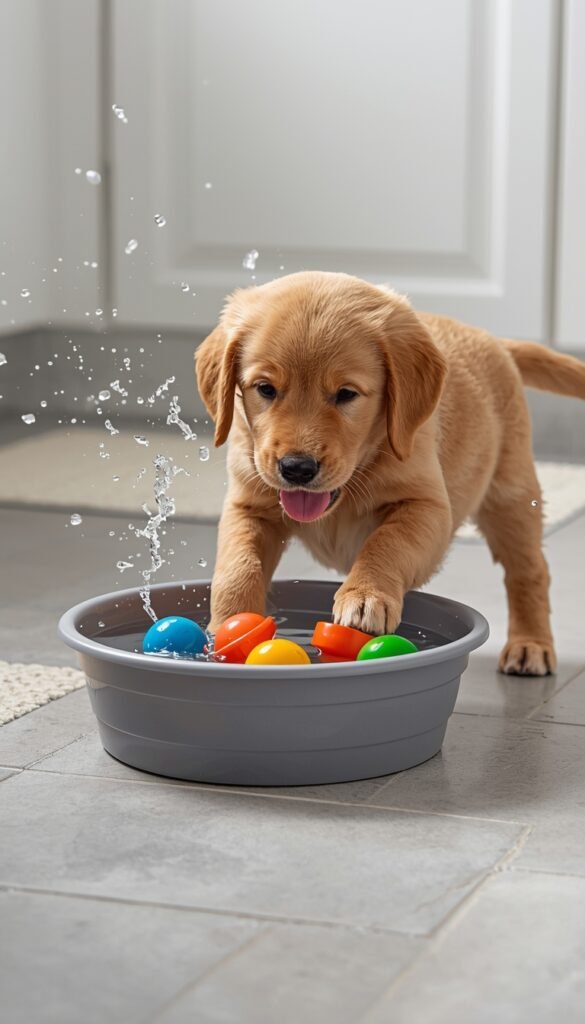
Controlled chaos is still chaos, but it’s fun
This one is particularly useful in warm weather or for high-energy breeds that need more outlets than dry toys can offer. A non-slip shallow basin with a small amount of water — set up on a hard floor with absorbent mats underneath, not on carpet — gives puppies a completely different sensory experience from their usual rotation.
Always supervise water play with young puppies. Keep sessions short, no more than 10 to 15 minutes, and dry them off thoroughly afterward. The energy expenditure is real — most puppies are noticeably calmer after a water session than after the same amount of time with regular toys.
9. Create a Sensory Exploration Area
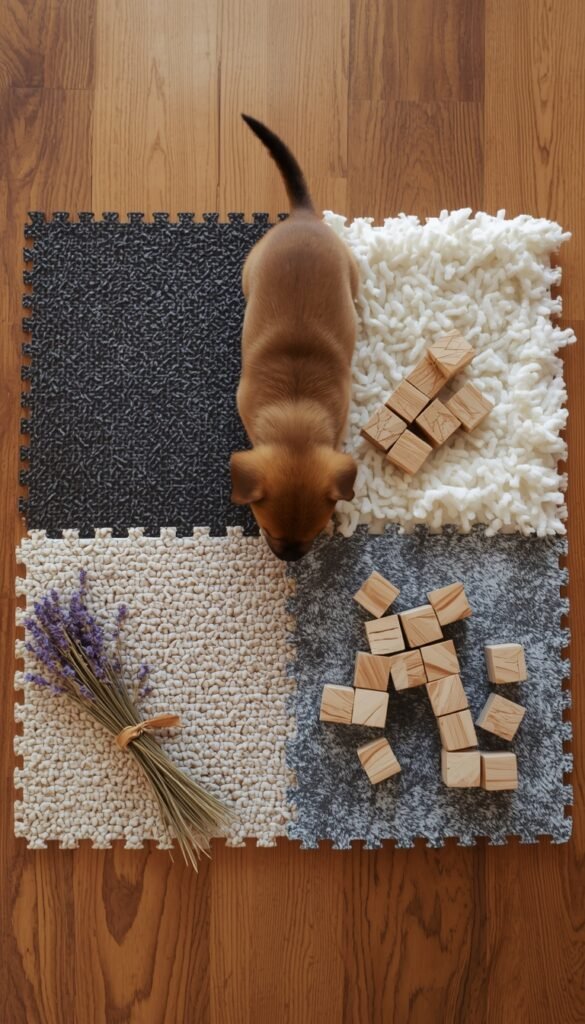
Engage every sense, tire out every brain cell
Puppies discover the world primarily through their noses and paws, and a sensory area gives them a contained, safe place to do exactly that. The concept is simple: gather a variety of textures, sounds, and smells and let your puppy investigate at their own pace.
Think crunchy mats, smooth rubber flooring, soft fleece pieces, untreated wood blocks, and a small pot of dog-safe fragrant herbs like rosemary in a corner they can sniff. The key is that nothing in this space is unpredictable or startling — your puppy controls the exploration entirely.
This setup is particularly valuable for anxious, shy, or under-socialized puppies. Confidence built through self-directed exploration transfers directly to how a dog handles new environments and situations out in the world. It’s a quiet setup that does a lot of quiet work.
10. Add a Comfortable Puppy Bedding Spot
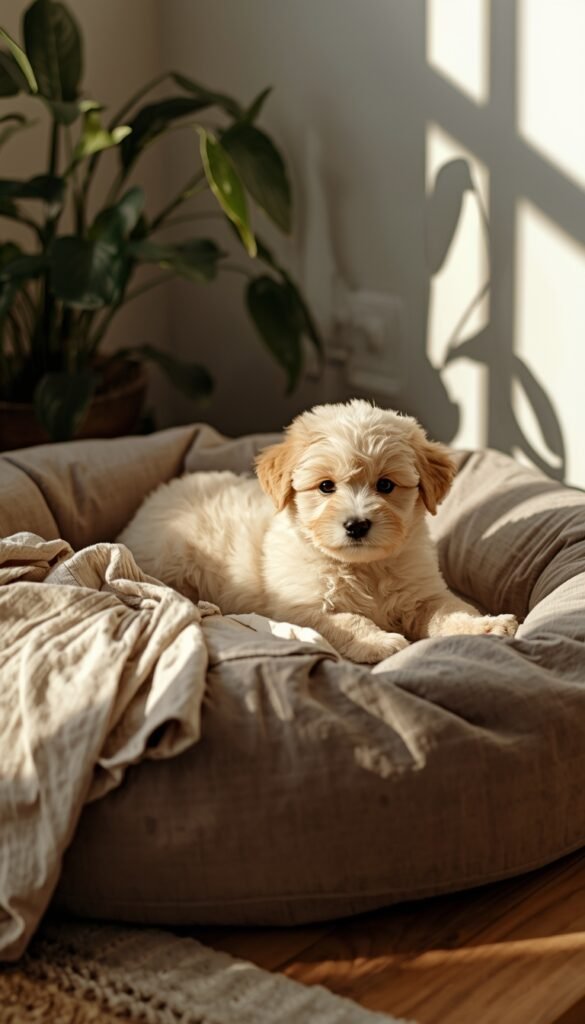
The finishing touch every indoor puppy area needs
Every good indoor puppy setup ends in the same place: a proper, comfortable bed where your puppy can rest and recover. Not a folded towel on the floor — an actual padded dog bed that supports developing joints and creates a consistent, predictable safe space.
Position it near a window if possible, so your puppy gets natural light and ambient entertainment while resting. Keep it in the same location every day — moving the bed around removes the sense of security it’s meant to provide. In the first few weeks, adding a worn t-shirt for comfort helps with settling, especially overnight.
A puppy that sleeps well is a puppy that trains well, behaves better, and regulates their energy more consistently throughout the day. The bed isn’t just comfort — it’s the foundation that makes everything else on this list work better.
5 Practical Tips for Setting Up Indoor Puppy Spaces
Start with two areas, not all ten. Pick the play zone and the nap corner first. Those two alone will change your puppy’s daily rhythm. Add more setups once you’ve seen how your pup uses what you’ve already created — it’s easier to build on what works than to set up everything at once and adjust later.
Keep everything washable. Puppy spaces get messy quickly. Before buying any mat, bed, or toy basket, check that it can be wiped down or thrown in the wash. Mats that can’t be cleaned become a hygiene problem within a week.
Rotate toys on a schedule. A toy that’s been in the play zone for two weeks is invisible to your puppy. Box up half the toys for a few days and swap them back in — they’ll respond like they’re brand new. This works reliably well and costs nothing.
Use the training area every single day, even briefly. Five minutes of consistent daily training in the same spot builds the association faster than longer, less frequent sessions. Regularity matters more than duration when you’re working with a puppy brain.
Design for your specific dog, not a generic puppy. A timid puppy needs the sensory area and the nap corner prioritized. A high-drive puppy needs the obstacle course and the play zone right away. Watch how your puppy spends their energy and let that guide which setups you build first.
Pick One Corner and Start There
Setting up these indoor puppy areas doesn’t require a dedicated room, a large budget, or a weekend renovation project. It requires paying attention to how your specific puppy actually moves through your home — where they get bored, where they rest, where they get into trouble — and giving those tendencies a proper outlet.
Every setup on this list solves a real problem: the destructive chewing, the inability to settle, the frantic energy that has nowhere to go. You don’t need to build all ten. Pick two that feel immediately doable, get them in place this weekend, and watch what changes.
Your puppy doesn’t need a perfect space. They need a space that’s theirs. Start there.