
When a dog’s birthday rolls around, the instinct most pet moms have is to grab a regular cake from the grocery store and just… give them a small piece. It seems harmless. It’s already there. How bad can one bite be?
Fairly bad, actually. Standard birthday cake is loaded with refined sugar, artificial flavoring, and ingredients that a dog’s digestive system was never meant to handle. Even a small slice can cause stomach upset, and some common cake ingredients — chocolate, xylitol-sweetened frosting, certain extracts — are genuinely dangerous for dogs.
The good news is that making something better takes almost the same amount of effort, and the result is genuinely more satisfying. This sweet potato and oatmeal dog cake uses simple, whole ingredients that are not just safe for dogs — they’re actually nutritious. No sugar, no mystery additives, no guilt while your dog inhales their slice.
I made this for Mochi’s second birthday after spending about twenty minutes reading the back of a store-bought dog treat and deciding I could do better. It came out beautifully, she demolished it in under a minute, and the leftover frosting — Greek yogurt and peanut butter — disappeared from the bowl while I was still washing dishes. I’ll take that as a review.
Why bother making a homemade dog cake?
The practical answer is ingredient control. When you make it yourself, you know exactly what went into it — no ambiguous “natural flavors,” no preservatives, no sweeteners added to improve shelf life. For dogs with food sensitivities or allergies, that clarity matters a lot.
There’s also the nutritional angle. This recipe uses ingredients that actually contribute something: sweet potato for vitamins and fiber, oat flour for digestible complex carbohydrates, Greek yogurt for protein and probiotics. It’s not just a treat shaped like a cake — it’s food your dog’s body can use.
According to the American Kennel Club, sweet potatoes are one of the best vegetables you can feed your dog, offering a natural source of dietary fiber, vitamins B6 and C, and beta-carotene. That’s a meaningful nutritional punch for something that also serves as birthday cake decoration.
And honestly? The look on your dog’s face when you put a small cake in front of them is worth the 40 minutes of effort. They have no idea what a birthday is, but they absolutely know when something smells incredible.
What makes this cake healthy for dogs?
Sweet Potato: More Than Just Filler
Sweet potato does two jobs in this recipe: it adds moisture, which keeps the cake from drying out, and it provides natural sweetness without a single gram of added sugar. Dogs genuinely love the flavor. The beta-carotene content supports eye health and immune function, and the fiber helps with digestion — which is a nice side effect of a birthday treat.
Use a plain sweet potato puree with no additives. Canned versions work well as long as the only ingredient listed is sweet potato.
The power of sweet potato
Moreover, it is great for feeding to your dog since it is rich in beta-carotene, vitamin C, and fiber. The ingredient used in making the cake makes it sweet without using any sugar since the dogs like this taste.
Oat flour the unsung hero
Oat flour is simply rolled oats blended into a fine powder, and it behaves beautifully in baked dog treats. It’s gentler on the digestive system than wheat flour, naturally gluten-light (though not gluten-free if you need that for your dog — look for certified gluten-free oats), and it creates a cake that holds together without being dense or heavy.
You can buy oat flour at most grocery stores or make your own: blend rolled oats in a food processor for about 60 seconds until fine and powdery.
Peanut butter and Greek yogurt frosting
This two-ingredient frosting is the reason dogs lose their minds over this cake. Greek yogurt is creamy, high in protein, and contains live cultures that are actually beneficial for gut health. Peanut butter adds flavor and richness that dogs find irresistible.
The only rule: always check your peanut butter label for xylitol. It’s an artificial sweetener that appears in some “natural” peanut butter brands and is extremely toxic to dogs — even small amounts can be fatal. The ingredient list should read: peanuts. Maybe salt. Nothing else.
Ingredients you’ll need
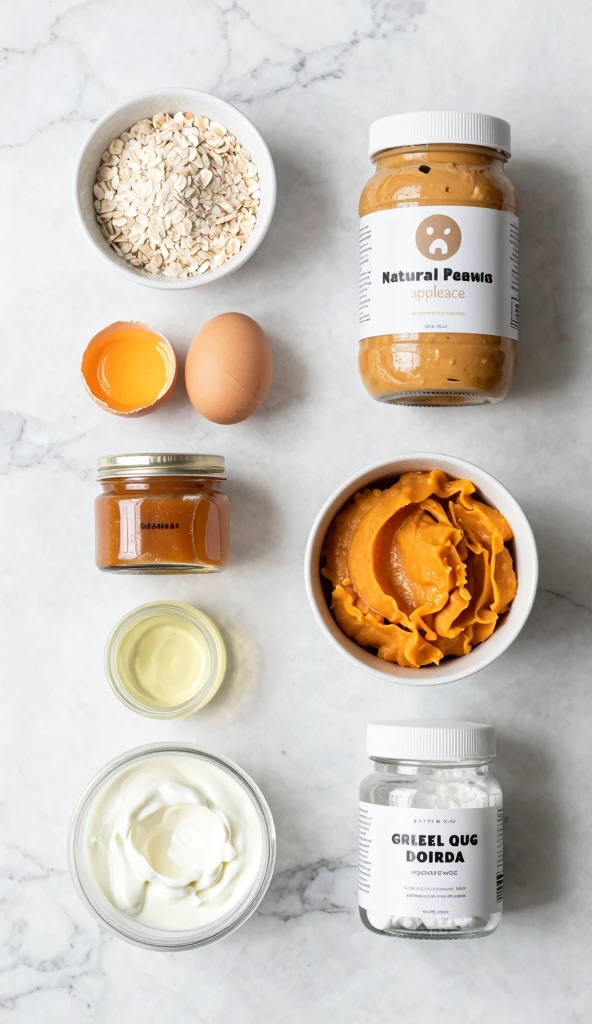
This recipe makes two 6-inch round cakes. Stack them for a two-layer cake, or keep them separate for two smaller celebrations. Double the recipe for a four-layer impressive stack.
Dry Ingredients
- 1 cup oat flour
- ¾ tsp baking soda
Wet Ingredients
- 1 egg
- ½ cup unsweetened applesauce
- ½ cup sweet potato puree (plain, no additives)
- ¼ cup natural peanut butter — xylitol-free
- ⅛ cup coconut oil, melted and cooled
Frosting
- ½ cup plain Greek yogurt (no added sugar or flavoring)
- ¼ cup natural peanut butter — xylitol-free
Ingredients to Avoid Completely
- Xylitol — toxic, even in trace amounts
- Chocolate — in any form
- Grapes or raisins — can cause kidney failure
- Onions or garlic — toxic to dogs
- Avocado — contains persin, which is harmful to dogs
Pet Mom Tip: Make your own oat flour in two minutes flat: add rolled oats to a blender or food processor and blend until fine and powdery. It’s cheaper than store-bought and works identically in this recipe. One cup of rolled oats yields just over one cup of oat flour.
How to make a sweet potato oatmeal dog cake step by step
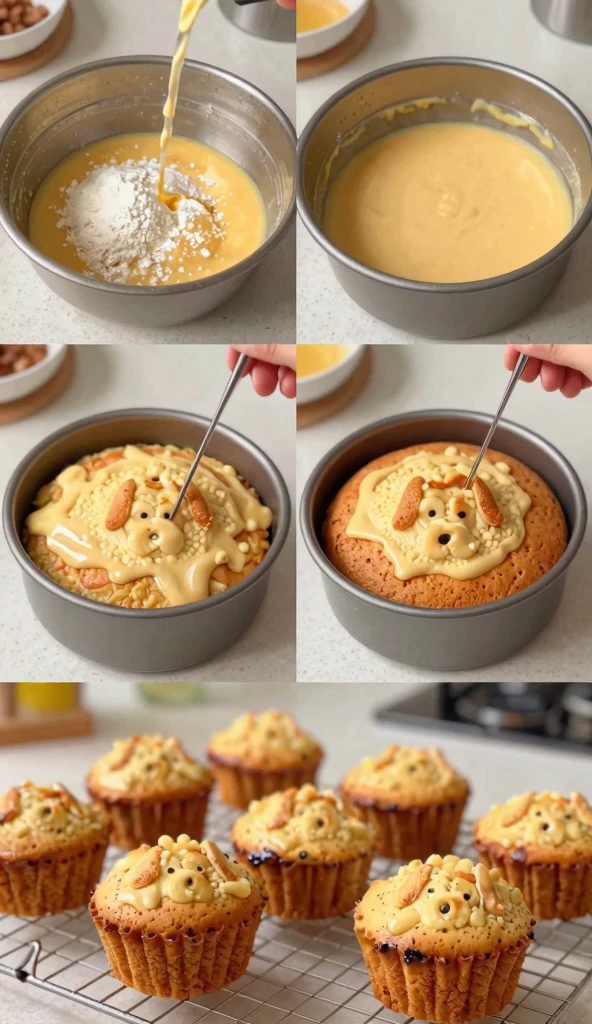
This comes together quickly. The active work is about 20 minutes; the oven takes care of the rest.
- Preheat your oven to 350°F (175°C). Lightly grease two 6-inch round cake pans and set aside.
- In a small bowl, combine the oat flour and baking soda. Stir to distribute evenly.
- In a large bowl, whisk together all wet ingredients — egg, applesauce, sweet potato puree, peanut butter, and coconut oil — until fully combined and smooth.
- Add the dry mixture into the wet mixture in small additions, folding gently between each addition until just combined. Do not overmix.
- Divide the batter evenly between the two prepared pans. Bake for 18–22 minutes, until a toothpick inserted in the center comes out clean.
- Let the cakes cool in the pans for 10 minutes. Run a knife around the edges, then flip onto a wire rack. Cool completely before frosting — at least 30 minutes.
- Make the frosting: whisk together Greek yogurt and peanut butter until smooth. Refrigerate until the cakes are fully cool.
- Level each cake layer with a serrated knife — just a thin shave off the domed top so they stack evenly. Place one layer on a plate, spread frosting on top, add the second layer, and spread the remaining frosting over the top.
Serve immediately or refrigerate until ready. If refrigerating, cover loosely and bring to room temperature for 10 minutes before serving.
Fruits and veggies dogs can (and can’t) eat
Once you start making homemade dog food and treats, it’s useful to have a clear reference for what you can and can’t add. Here’s a practical guide based on commonly recommended guidelines for dog nutrition:
| Safe for Dogs | Fine in Moderation | Avoid Completely |
| Apples, pears, mangoes, blueberriesCarrots, sweet potatoes, pumpkinGreen beans, cucumbers, peas (not canned) | Bananas, broccoli, cantaloupeCelery, cranberries, peachesPineapple, raspberries, strawberries, spinach | Grapes and raisinsOnions and garlicAvocado, cherries, mushroomsAnything with xylitolChocolate |
When introducing any new ingredient into your dog’s diet — even a safe one — start with a small amount and watch for any reaction over 24 hours. For a more comprehensive breakdown, see our article on foods dogs can and cannot eat.
Tips for Building and Serving the Cake
You don’t need cake decorating experience. Your dog will not be judging the aesthetic. But a few small things make the process easier and the result better:
- Level your layers. Use a long serrated knife to shave the domed top off each cake layer so they sit flat and stack without sliding. Takes 30 seconds and makes a real difference.
- Chill the frosting before spreading. Straight from mixing, it can be too soft. 20 minutes in the fridge firms it up just enough to spread cleanly without running down the sides.
- Serve in small portions, especially the first time. Even a healthy cake is a rich treat. A slice the size of a large cookie is plenty for a medium-sized dog. For small dogs, go smaller still and save the rest.
- Skip the candles. Or supervise very closely if you insist. Dogs do not understand the concept of blowing them out, and the only outcome is a dog who has eaten a candle or burned their nose. Neither is a good birthday memory.
- Store leftovers in the fridge for up to 3 days. The frosting contains dairy, so this one shouldn’t sit at room temperature for more than a couple of hours. Cover loosely with plastic wrap or store in an airtight container.
Safe for dogs
- Apples, pears, mangoes, blueberries great for fiber and vitamins
- Carrots, sweet potatoes, pumpkin beta-carotene powerhouses
- Green beans, cucumbers, peas (avoid canned peas) low-calorie and crunchy
Fine in moderation
- Bananas, broccoli, cantaloupe, celery, cranberries, peaches, pineapple, raspberries, strawberries, spinach
Keep these away from your dog
- Asparagus, avocado, cherries, grapes, mushrooms, onions, tomatoes, and anything with xylitol
Tips for building and serving the cake
You do not need any professional skills to decorate cakes for this; your dog will never criticize your slicing skills. However, there are some minor factors that can help you with this process.
- Level your layers. Use a long serrated knife to shave off the domed top of each cake so they stack evenly.
- Chill the frosting first. This keeps it from sliding around when you build the layers.
- Serve in small portions. Even healthy dog treats are best given in moderation, especially the first time. Every dog’s stomach is different.
- Skip the candles. Unless you enjoy watching your dog try to eat a burning object. 🙂
Can other dogs eat this cake too?
Yes, absolutely. Everything in this recipe is made for dogs, and the oat flour base means it’s wheat-free — useful for dogs with wheat sensitivities, though oats are not the same as gluten-free unless you specifically source certified gluten-free oats.
If you’re hosting a dog birthday party and feeding this to multiple dogs with different health histories, keep portions small and let the humans know what’s in it. Most dogs tolerate this recipe without any issues, but dogs with specific allergies — particularly peanut allergies — would need a modified version. Sunflower seed butter is a good substitute for peanut butter in both the batter and the frosting, as long as it’s plain with no added sweeteners.
For dogs with known health conditions, a quick call to your vet before the party takes five minutes and removes all doubt.
A Cake Worth Celebrating
Making your dog a birthday cake might feel like a small thing, but it’s one of those gestures that’s genuinely fun — for you and for them. The process is easy, the ingredients are simple, and the result is something you can feel good about setting in front of your dog without a second thought.
No sugar, no mystery ingredients, no guilt. Just a dog who is deeply, unreservedly happy about what you just put in front of them.
Whether it’s a first birthday or a tenth, this cake earns the celebration. And if the frosting disappears from the bowl before you’ve even finished assembling — well, that’s just quality control.