

Most new dog owners do exactly the same thing first: they watch a few YouTube videos, grab a bag of treats, and try to teach their dog to sit, stay, come, and heel — all in the same afternoon. The dog looks confused. The human gets frustrated. The treats disappear. And somehow nothing sticks.
Here’s the reality: dogs don’t learn that way, and honestly, neither do we. The reason a structured, day-by-day plan works so much better is because it builds each skill on the one before it. Your dog gains confidence. You gain trust in the process. And by the end of the week, you have a dog who actually listens — not out of fear, but because they understand what you’re asking.
This 7-day dog training plan uses positive reinforcement only. No punishment, no dominance theory, no complicated equipment. Just clear communication, consistency, and a handful of good treats.
Why a 7-Day Plan Actually Works
The problem with trying to teach everything at once is that dogs — like children — need repetition in small doses to really retain something. According to the American Kennel Club, short training sessions of five to ten minutes are significantly more effective than longer ones, because dogs hit mental fatigue faster than most people realize.
I learned this the hard way with my own dog, Biscuit. I’d spend 40 minutes trying to get her to hold a down-stay, and by the end we were both exhausted and she hadn’t improved at all. The day I switched to short, focused sessions? She started nailing it within three days. Structure, it turns out, is the secret sauce.
Before you start, make sure you have these on hand:
- Small, soft treats (or cooked chicken — dogs lose their minds for it)
- A standard leash and harness
- A quiet space with minimal distractions
- Patience — non-negotiable, I’m afraid
Your Week at a Glance
Here’s what the full week looks like, so you can plan ahead:
| Day | Focus | Main Goal | Session Length |
| Day 1 | Trust Building | Bond first, commands later | 10 min |
| Day 2 | Focus Training | Eye contact on cue | 5 min x 2 |
| Day 3 | Sit | Reliable sit from lure to verbal | 5–8 min |
| Day 4 | Stay | Impulse control basics | 8–10 min |
| Day 5 | Come | Recall that could save their life | 8–10 min |
| Day 6 | Down | Settling on command | 8–10 min |
| Day 7 | Combined Review | Chain all commands together | 10–15 min |
Table of Contents
Day 1: Build Trust Before Anything Else
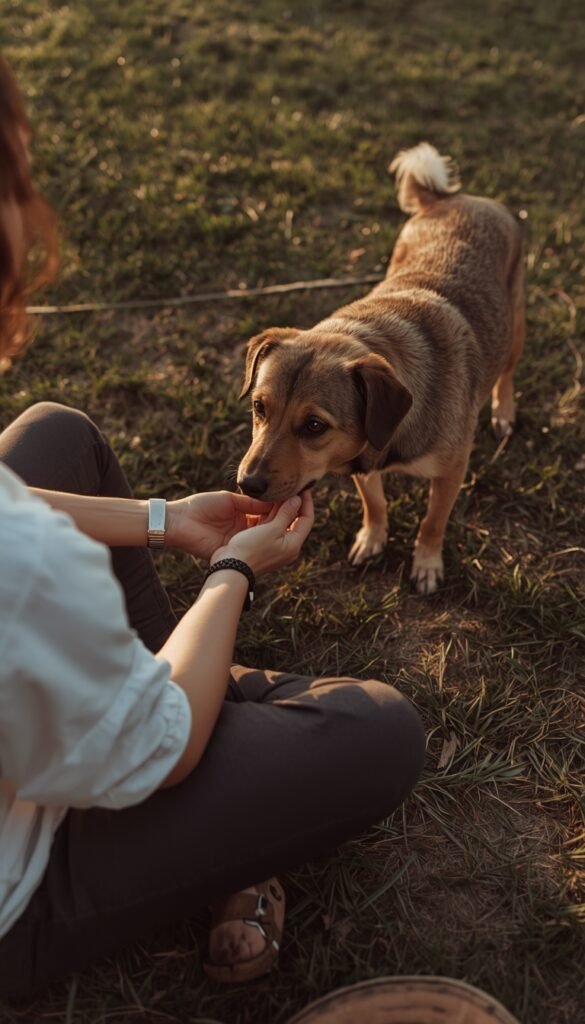
A lot of first-time trainers skip straight to commands. That’s understandable — you’re excited, you have treats, your dog is right there. But here’s what matters more on day one: connection. You genuinely cannot teach a dog who doesn’t trust you yet.
Spend this session in a calm space with no agenda. Let your dog explore. Let them come to you on their own terms. Every time they look at you, make eye contact, or choose to move toward you, mark it with a cheerful “yes!” and offer a treat. You’re not training a behavior — you’re building a relationship.
Name Recognition Is Your First Win
Say your dog’s name in an upbeat tone. The second they look at you: treat. Repeat this casually throughout the day — no big training setup needed. You’re simply teaching them that their name means something good is coming. That reflex will be the foundation of everything else this week.
Keep this session under 10 minutes. End while they’re still happy and engaged. You want them excited for tomorrow, not burned out. This applies every single day of the plan.
Day 2: Teaching Focus Because Squirrels Are Everywhere

Once your dog knows you’re a safe and rewarding presence, the next step is teaching them to actually pay attention to you. Focus training is one of the most underrated parts of the whole process, and skipping it is why so many dogs learn to sit perfectly at home but completely ignore you the moment a pigeon walks by.
Hold a treat near your nose, say “watch me” or “look,” and wait. The moment your dog makes eye contact — even for half a second — mark it and reward. Build gradually: one second of eye contact, then two, then three. Never push for too much too soon.
Why This Step Matters More Than You Think
A dog that knows how to focus on you can tune out distractions. That means fewer embarrassing moments at the park, fewer standoffs with the neighbor’s cat, and an overall much calmer dog in public. This is the skill that makes all the other commands actually work in real-world situations.
Keep focus sessions under five minutes. This kind of mental work is genuinely tiring for dogs. Short and rewarding beats long and frustrating every time.
Day 3: The Sit Command Classic for a Reason
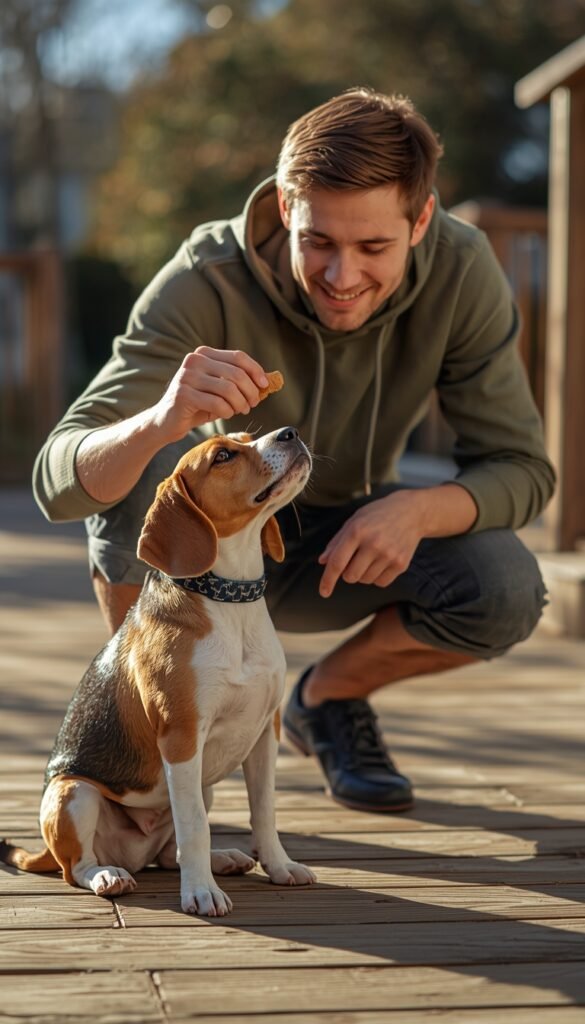
Ah, “sit.” Simple? Yes. Useful? Absolutely. Sit is the gateway command — once your dog nails this, everything else becomes easier to teach because they already understand the shape of a training session.
Hold a treat right at your dog’s nose, then slowly move it up and back over their head. Their bottom will naturally drop to the floor as they follow the treat upward. The moment it touches down, say “sit” clearly, and reward immediately. Timing matters here — you’re marking the exact behavior you want.
Phasing Out the Treat Lure
Once your dog is sitting consistently with the lure, start saying “sit” before you show the treat. They’ll begin connecting the word to the action. From there, you can fade out the treat slowly and replace it with verbal praise or an occasional reward. Never push them into position physically — the goal is a dog who chooses to sit, not one who sits because they had no other option.
Pet Mom Tip: If your dog keeps jumping up instead of sitting, you may be holding the treat too high. Keep it close to their nose and move slowly. The moment they offer any downward movement, reward it. You’re shaping the behavior, not demanding it all at once.
Day 4: The Stay Command Teaching Impulse Control
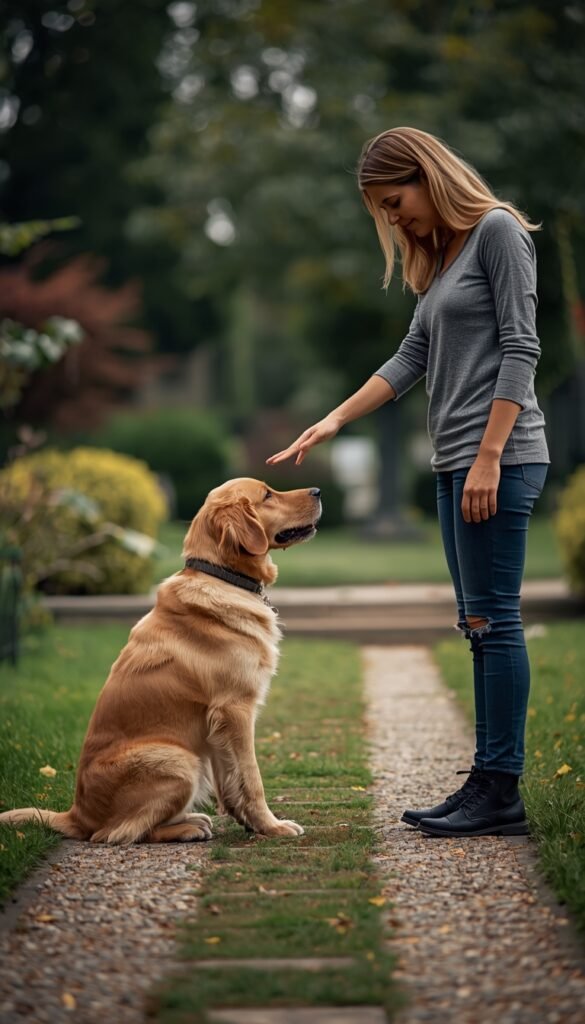
Your dog can sit. But can they sit while you walk away? That’s a different skill entirely, and honestly one of the most practical ones in this whole plan. A reliable stay means your dog can wait calmly at doorways, during vet visits, and when guests arrive.
Ask for a sit, hold your palm flat toward them like a stop sign, and say “stay” in a calm, firm tone. Take one step back. Just one. If they hold it, step back to them — don’t call them to you yet — and reward warmly.
What to Do When They Break
They will break the stay. A lot. That’s completely normal on day four. When it happens, don’t scold — just gently reset them and try again with a shorter distance. The goal is calm, confident repetition, not perfection.
Always release with a clear cue like “okay” or “free.” This tells your dog the stay is officially over. Without a release word, they’re left guessing — and dogs who guess tend to make their own decisions, which is rarely what you had in mind.
Day 5: The Come Command The One That Could Save Their Life
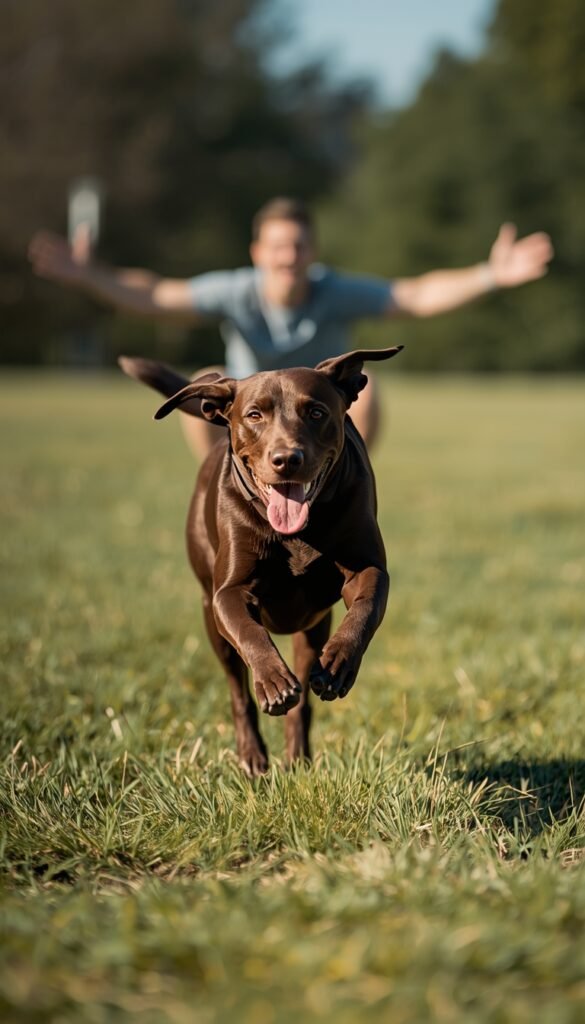
No exaggeration here. A solid recall is one of the most important things you will ever train. If your dog slips out the front door, bolts at the dog park, or darts toward a road, “come” is what brings them back safely. It deserves your full attention and your best treats.
Start close — just a few feet away in a contained space. Say their name, then “come!” in your most cheerful, welcoming tone. Bend slightly toward them; it makes you look less intimidating and more inviting. The moment they take even one step toward you, praise them enthusiastically. When they reach you, give the best treat you have. Make arriving at you feel like winning the lottery.
The Golden Rule of Recall
Never — and I mean never — call your dog to come for something they dislike. Nail-trimming, bath time, the end of a fun play session: don’t use “come” for any of it. If “come” sometimes leads to unpleasant things, your dog will start hesitating, and a hesitating recall is a dangerous one.
Practice recall indoors too. Quick five-second games throughout the day keep the command fresh without needing a formal training setup.
Day 6: The Down Command Getting Them to Chill Out
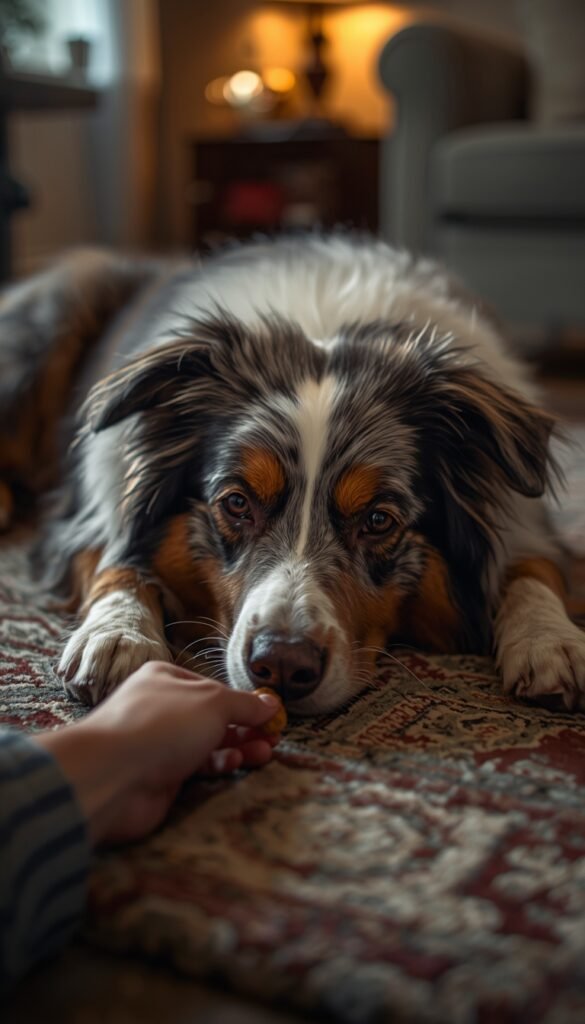
Down is one of the most practical commands in the whole plan. It teaches your dog to truly settle — which is invaluable when you have guests over, when you’re trying to eat dinner in peace, or when your dog needs to decompress after a walk.
Ask for a sit first. Hold a treat right at their nose, then slowly move it straight down to the floor and then slightly forward, like you’re drawing an “L.” Your dog’s elbows will follow the treat to the ground. The moment they’re fully down, say “down” clearly and reward.
Patience Is Key Here
Some dogs resist the down command because the position feels exposed and vulnerable. If your dog keeps popping back up, slow your lure movement down even further and reward any incremental movement toward the floor. Build it in small pieces. There’s no rush.
Once they’ve got it, start using it during real-life moments — when friends come over, during family dinners, when you need five quiet minutes. That’s when this command earns its keep.
Day 7: Put It All Together This Is Where It Gets Fun
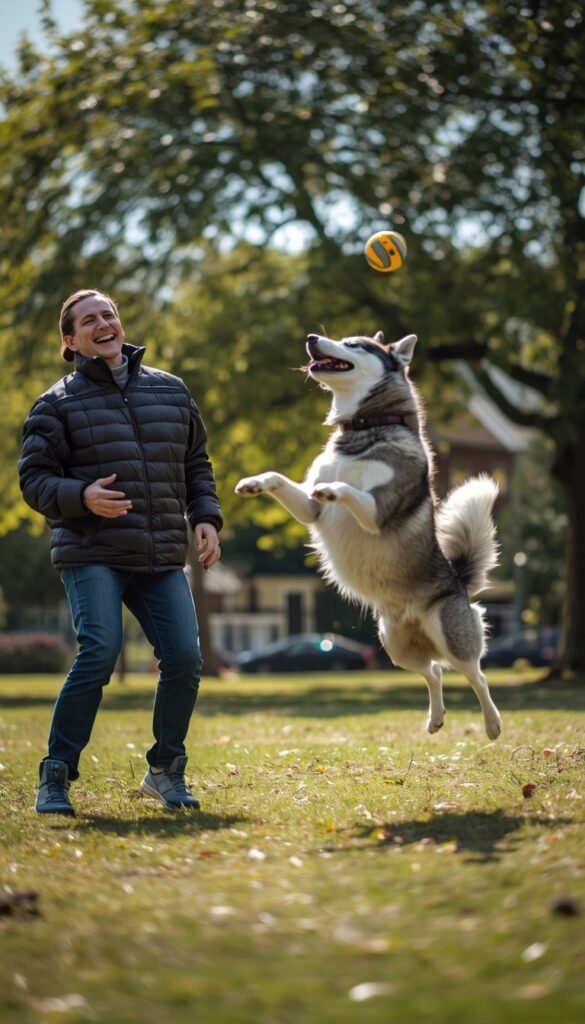
Day seven is genuinely my favorite part of this whole plan. You’ve spent six days teaching individual pieces. Today, you get to see how they fit together — and so does your dog.
Run through all four commands in different sequences. Sit, then stay, then come. Down, then sit, then stay. Mix it up deliberately. When you vary the order, your dog has to actually listen for each cue rather than predicting what comes next. That’s how real-world reliability gets built — not through rote repetition, but through genuine responsiveness.
End With Celebration
Finish the session with genuine praise, a few of their favorite treats, and playtime. You have both put in real work this week. Celebrate that — even if a few commands are still shaky. Especially if a few commands are still shaky. Real progress is messy and nonlinear, and that’s completely fine.
Troubleshooting: When Things Go a Little Sideways
Not every session will go smoothly. That’s not a sign you’re failing — it’s just training. Here’s how to handle the most common hiccups:
- Dog loses interest quickly? Shorten the session or upgrade to higher-value treats. Cooked chicken or cheese usually does the trick.
- Dog gets anxious or distracted? Move to a quieter space and rebuild confidence there before adding distractions back in.
- Commands start fading after a few weeks? Refresh them with occasional reward-based repetitions. Skills need maintenance, not just initial learning.
- Dog seems frustrated? End the session early on a win — even a tiny one. Always finish on success, no matter how small.
The mindset shift that changes everything: training is communication, not control. When your dog understands what you’re asking, they genuinely want to respond. That cooperation is what you’re really building here.
5 Tips to Make This Week’s Training Stick
These aren’t fluff. These are the specific habits that separate dogs who learn quickly from dogs who seem to forget everything overnight:
- Train before meals, not after. A slightly hungry dog is a motivated dog. Food loses its power as a reward when your dog has just eaten a full bowl.
- Use a consistent marker word. Pick either “yes” or get a clicker, and use it the same way every time — immediately when the correct behavior happens, before the treat arrives. Timing is everything in positive reinforcement.
- One person leads per session. If multiple family members are training the dog, make sure you’re all using the same words and hand signals. Mixed signals are genuinely confusing for dogs.
- Train in different locations. A dog who only knows how to sit in your kitchen hasn’t truly learned to sit — they’ve learned to sit in your kitchen. Take the training to the backyard, a quiet park, a friend’s house. Generalizing commands to new environments is what makes them reliable. You can read more about this on the MomPaw guide to training your dog in public.
- Quit while you’re ahead. End every session on a successful repetition. If you’ve just hit a rough patch, ask for something easy — like a sit you know they can do — reward it warmly, and stop there. You want your dog walking away from training feeling good.
Keeping the Momentum Going After Day 7
The seven-day plan gives you a strong foundation, but that’s really just the beginning. The dogs who truly thrive are the ones whose owners keep it going in small doses long after the first week.
Five to ten minutes of practice built into your daily routine — during walks, before meals, or while you’re watching TV — is all it takes. Variety keeps dogs engaged. The more you practice commands in new settings and situations, the more reliable those skills become out in the real world.
Your energy matters more than any technique. Stay calm, stay consistent, and notice the small wins. Your dog is paying close attention to how you feel — and a relaxed, confident trainer produces a relaxed, confident dog.
A Week Well Spent
Seven days. A handful of short sessions. Some good treats and a genuine willingness to show up consistently. That’s genuinely all it takes to get real results with your dog.
What you’ll have at the end of this week isn’t just a dog who can sit on command. You’ll have a dog who pays attention to you, trusts you, and understands how to communicate with you. That relationship — built through patience and positive reinforcement — is what makes everything else easier, whether you’re teaching a new trick or just trying to have a calm walk around the block.
Start tomorrow morning. Your dog is already ready.