Most dog owners figure the solution is simple: just give your dog more toys. You toss a few chew ropes in the corner, maybe pick up a squeaky octopus at the checkout, and wait for the problem to solve itself. It doesn’t. If anything, you end up with an identical situation, a bored dog and a lap full of untouched rubber chickens.
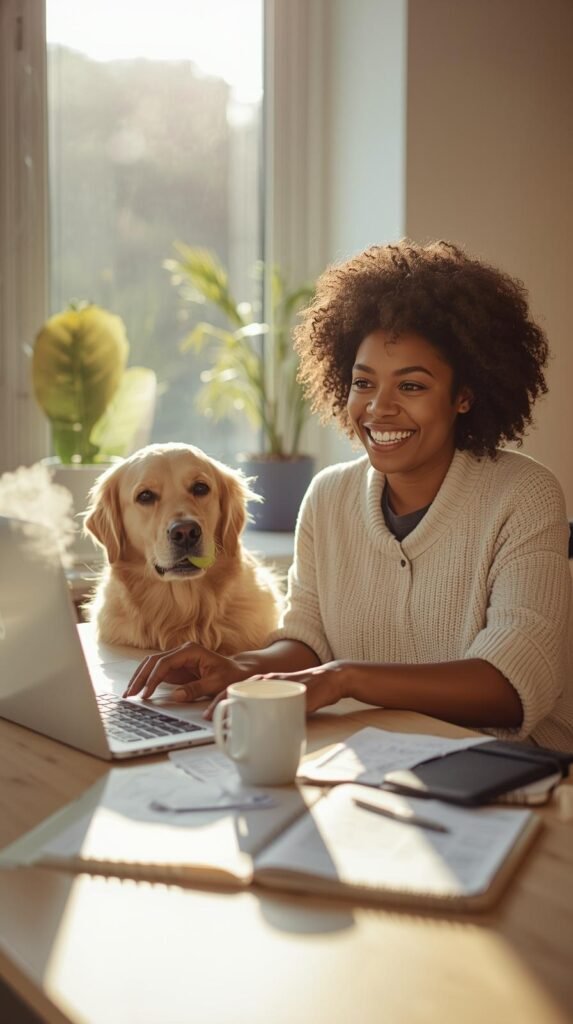
Here’s what actually helps: smart, strategic enrichment. Not more stuff. Not longer play sessions squeezed between calls. A rhythm that works with your working from home instead of constantly interrupting it. I’ve worked from home with dogs for years now, and once I understood what boredom actually looks like in dogs — and what truly fixes it, everything got easier.
This guide covers exactly that. Whether your dog follows you to the bathroom like a shadow or loses it every time you sit down at your desk, there are practical, tested strategies here that will help.
Why Your Dog Is Low-Key Losing Their Mind During Work Hours
Before solving the problem, it helps to understand it. Dogs are deeply social and highly tuned to human routine. When you’re home all day but mentally somewhere else — headphones on, eyes locked on a screen — that’s genuinely confusing for them. You’re there, but you’re also not there. It’s frustrating in a way they can’t articulate, so they find other outlets.
Boredom in dogs rarely looks like quiet sulking. It looks like this:
- Following you room to room like a furry shadow with abandonment issues
- Barking or whining at the exact moment you un-mute yourself on a client call
- Chewing things they know they shouldn’t — shoes, cables, your last good pen
- Sudden zoomies erupting from nowhere at 2pm
- Pacing like they’re rehearsing a documentary about captivity
The fix isn’t constant playtime — you’d never get any work done. It’s structured enrichment that satisfies both brain and body, so your dog isn’t left searching for stimulation in all the wrong places.
Table of Contents
Start the Morning Right Before Your First Cup of Coffee

Here’s something I learned the hard way: the biggest thing you can do for your dog during work hours happens before work begins.
A good morning walk or backyard session depletes energy in the best possible way. And it’s not just physical tiredness that matters — mental stimulation during a walk (sniffing, navigating new smells, taking in the environment) is genuinely exhausting for dogs. According to the American Veterinary Medical Association (AVMA), regular physical and mental exercise is one of the most effective ways to prevent problem behaviors in dogs.
Think of it this way: a dog who’s had a satisfying 20-minute sniff walk is dramatically less likely to bark at the delivery truck during your 10 a.m. call.
Pet Mom Tip: Sniffing is more mentally tiring than jogging for most dogs. On days when you’re short on time, skip the fast-paced walk and do a slow “sniff stroll” instead — let your dog lead and stop wherever she wants. Ten minutes of this often does more for her mood than a longer, brisk walk.
The “Tired Dog” Strategy
It can be thought of like this: a dog that has had a wonderful morning walk is less likely to be barking at the postman during your 10am meeting.
Shoot for about 15-20 minutes of exercise prior to logging into the Internet. It need not be rigorous either a leisurely walk, during which you can indulge in a lot of sniffing, is just as effective as a sprint. Hint: sleep-deprived dogs snooze more!
Turn Mealtime Into a Full-On Activity
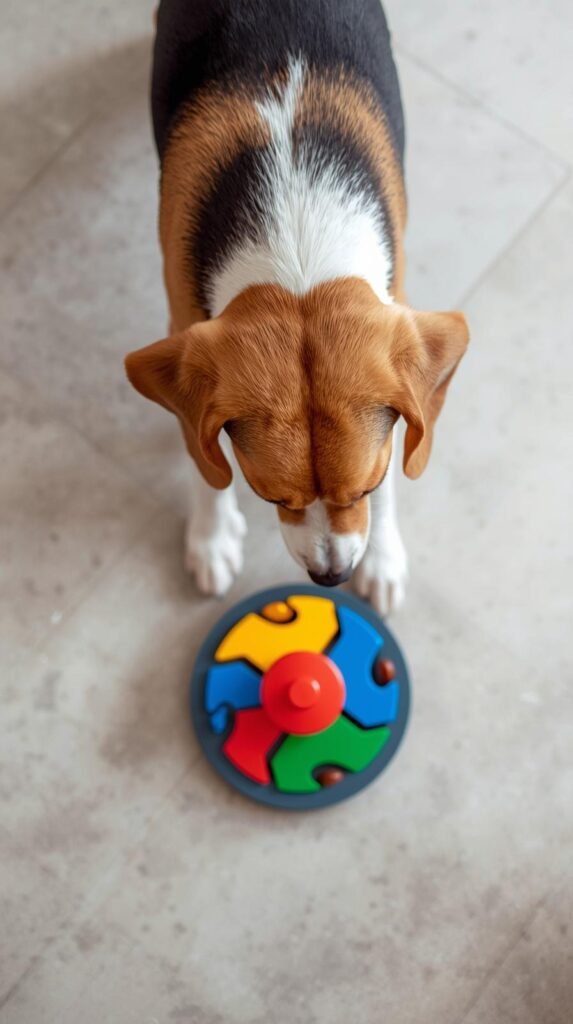
This is the single most underused tool in a dog owner’s kit. Feeding from a bowl takes about 45 seconds. That’s 45 seconds of engagement, twice a day — an almost comically missed opportunity.
Swap the bowl for enrichment feeding. Here are options that actually work:
- Stuffed Kong or similar toy: Fill with kibble, a smear of peanut butter, or plain yogurt. Freeze overnight for an extended session.
- Snuffle mat: Scatters kibble through fabric folds your dog has to nose through. Brilliant for sniff-driven breeds.
- Puzzle feeders: Available in beginner to advanced difficulty. Start easy — if the puzzle frustrates your dog, they’ll give up instead of engaging.
- Scatter feeding: Toss kibble across the kitchen floor or into the grass outside. Low-tech, high-payoff.
- Lick mats: Spread peanut butter, mashed banana, or plain Greek yogurt across a textured mat. Repetitive licking is naturally calming for dogs.
Enrichment feeding triggers problem-solving behavior, which is mentally exhausting in the best way. A frozen Kong during your first block of the morning? That’s easy 20–30 minutes of quiet you didn’t have before.
Rotate Toys Like You’re Running a Dog Netflix Library
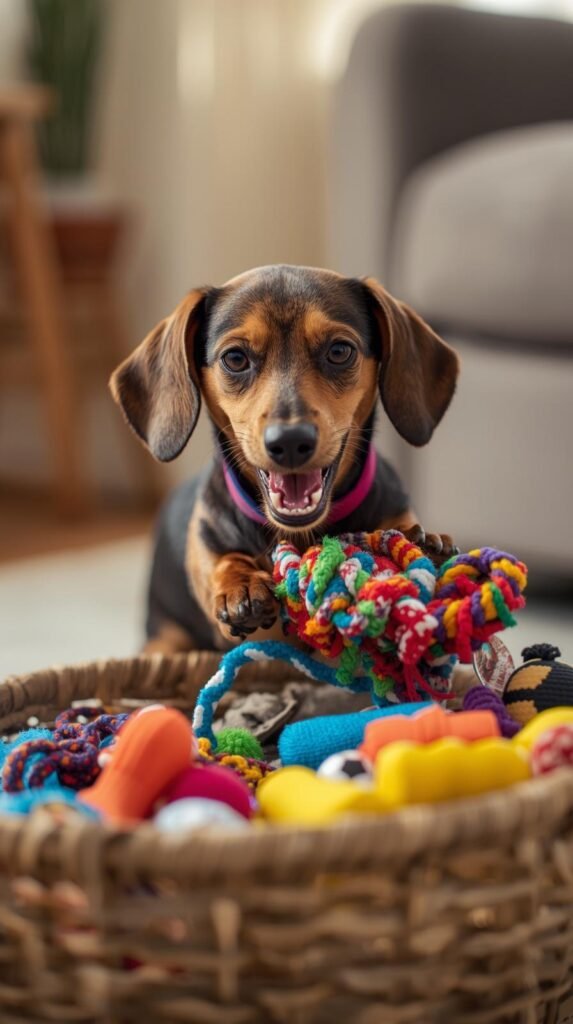
If your dog has a toy bin they consistently ignore, you haven’t got a lazy dog — you’ve got an overstimulated one. When every toy is available all day every day, they all become boring background furniture. Novelty drives engagement.
The fix is embarrassingly simple and costs nothing: hide most of your dog’s toys and rotate them every few days.
How to Run a Toy Rotation
Split your dog’s toys into two or three groups. Store all but one group away. Every few days, swap in a different group. Your dog will rediscover toys they’d completely tuned out — some with the enthusiasm of a dog who’s never seen a rope toy before in her life.
This works especially well with chew toys, tug toys, and interactive toys. Add the occasional homemade option — a knotted old t-shirt or a sock stuffed with crinkled paper — and the rotation stays fresh without costing a thing.
Quick-Reference: Work-From-Home Dog Enrichment Strategies
Not sure which strategy to reach for? This table breaks it down at a glance:
| Strategy | Time Required | Mental or Physical? | Best For |
| Morning walk/sniff session | 15–20 min | Both | High-energy dogs |
| Frozen stuffed Kong | 5 min prep | Mental | Solo focus time |
| Snuffle mat feeding | 0 min prep | Mental | Nose-driven breeds |
| Toy rotation | 2 min | Mental | Dogs who ignore toys |
| 5-min training session | 5 min | Mental | Dogs who love to learn |
| Hide-and-seek (you hiding) | 5 min | Mental + Physical | Rainy/indoor days |
| Safe chew toy | 0 min | Calming/Physical | Anxious or mouthy dogs |
Build a Workday Routine Your Dog Can Actually Predict
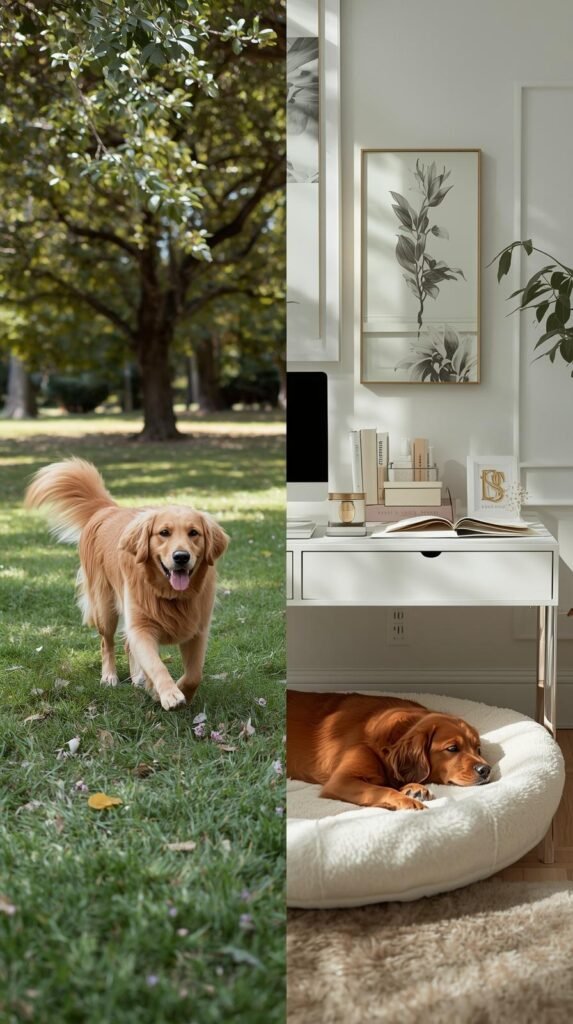
Dogs can’t check a calendar, but they’re extraordinarily good at reading patterns. Once a routine clicks, they stop questioning your schedule and start anticipating it. That shift — from confused and restless to calm and expectant — is one of the most satisfying things to watch happen.
A simple workday structure might look something like this:
- Morning walk or backyard play session
- Breakfast via snuffle mat, scatter feeding, or puzzle toy
- First nap while you work through your morning tasks
- Midday potty break + a quick 5-minute play or training session
- Afternoon rest while you close out the day
The key isn’t rigidity — it’s consistency. Hit roughly the same checkpoints at roughly the same times each day. Over a few weeks, your dog will start settling into downtime instead of demanding attention during it. Routine is your best friend here, and your dog’s.
Quick Mental Games Between Meetings (Yes, Even 5 Minutes Counts)

You don’t need a full play session to meaningfully engage your dog. Short mental breaks between calls are genuinely effective — and honestly, they’re good for you too.
Easy 5-Minute Brain Games
- Treat hunt: Hide a handful of treats around the room while your dog waits, then release her to sniff them out.
- Basic command refresher: Run through sit, stay, down, or leave it. Even three minutes of this is tiring for most dogs.
- New trick intro: “Spin,” “paw,” “back up,” or “touch” are great starters. Keep it short and upbeat.
- Which hand: Hide a treat in one fist, hold both out, let your dog figure it out. Simple, effective, endlessly repeatable.
Mental stimulation genuinely tires dogs out faster than physical activity alone. A dog who spent five minutes doing focused nose work will often be calmer for the next hour than one who ran around for 20 minutes. It’s a wildly efficient use of your break time.
Indoor Dog Activities for Those Impossible Days

Some days, outdoor exercise simply isn’t happening. It’s raining sideways, you’re slammed with back-to-back calls, or you just don’t have bandwidth. That’s exactly when indoor enrichment earns its keep.
Solid indoor options that actually work:
- Hide-and-seek: Have your dog wait in another room while you hide, then call her to find you. Most dogs absolutely love this.
- Structured tug: Teach “drop it” first, then tug becomes a controlled, tire-out game with clear rules.
- Indoor nose work: Hide treats in different rooms and send her on a search mission.
- Safe chew session: A good chew toy (bully stick, dental chew, or appropriate chew bone) is naturally calming and can keep a dog occupied for a surprisingly long time.
- Short training session: Revisit old commands or introduce something new. This doubles as bonding time and mental exercise.
I keep a rotation of indoor activities ready specifically for bad-weather weeks. Once your dog knows a few of these games, setting them up takes almost no time at all. You can find more ideas in our guide to indoor enrichment activities for dogs.
Teach Your Dog That Rest Is Actually the Goal
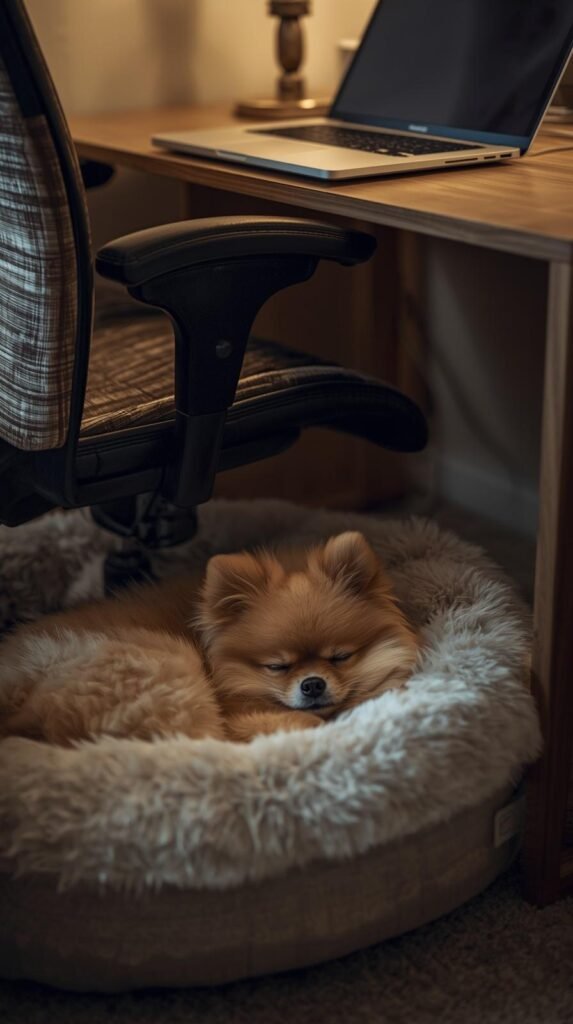
This part gets skipped constantly, which is a shame because it might be the most important piece of the puzzle. Dogs don’t automatically know how to relax. They learn it, exactly the way they learn everything else — through repetition and reinforcement.
If you respond to every whine, nudge, or dramatic flop once your dog’s real needs are met (potty, food, water, exercise), you’re training her to keep asking. You’re not being mean by not responding — you’re actually helping her learn one of the most valuable skills she can have.
Setting Up a Good Rest Space
- A dog bed or crate in your work area gives her a designated spot that belongs to her during work hours.
- Avoid eye contact when she’s being pushy — even a glance is engagement and can reinforce the behavior.
- Reward the calm: when she settles quietly on her own, occasionally toss a treat her direction without making a fuss. You’re marking exactly the behavior you want.
- Be consistent: if rest time is rest time, keep it that way every day. Mixed signals are the enemy of progress here.
Pet Mom Tip: The first few days of enforcing rest time can feel rough — your dog may escalate before she settles. Stick with it. Most dogs adjust within a week or two, and what you get on the other side is a dog who genuinely knows how to decompress. That skill pays off for the rest of her life.
Tips for Making It All Stick
The strategies above work best when they’re woven together consistently. A few things that make a real difference in the long run:
- Prep the night before. Stuff and freeze a Kong before bed. Set out the snuffle mat. Knowing the morning is handled removes one decision from an already busy day.
- Manage your own expectations. Some days the routine breaks. That’s fine. One imperfect day doesn’t undo a good routine — just pick it back up.
- Watch your dog, not just the clock. Learn her personal signals for restlessness versus genuine calm. Some dogs need more enrichment earlier in the day; others hit their stride in the afternoon.
- Use your lunch break intentionally. Even a 10-minute midday walk resets her energy levels and gives you both a genuine break from screens.
- Make enrichment a habit, not a reward. Enrichment feeding, toy rotation, and short training sessions work best when they’re part of the daily structure — not something you reach for only when things are going wrong.
The Real Secret: It’s About Balance, Not Entertinment
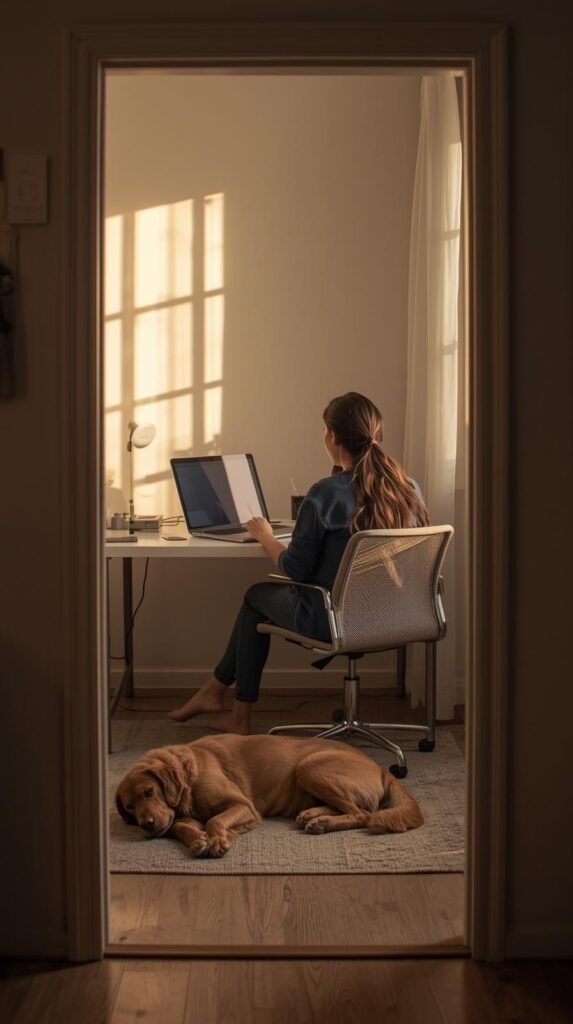
Let’s be honest you can’t entertain your dog all day. And you shouldn’t have to. The real goal is building a rhythm where your dog gets what they need before they start demanding it.
When your dog has had:
- Enough physical exercise (even a quick morning walk counts)
- Mental engagement (enrichment feeding, a puzzle, a short training session)
- Predictable downtime (a routine they can count on)
…they naturally settle. That’s when working from home with a dog stops feeling like a negotiation and starts feeling peaceful.
Your dog isn’t trying to derail your day. They just need to understand where they fit in it. Build that structure, and you’ll both be happier for it.
Working From Home With a Dog Can Actually Be Great
Working from home alongside a dog is one of the genuinely nice things about this kind of lifestyle. There’s something good about having her nearby. But it only works well when she’s satisfied, settled, and understands where she fits into your day.
Start with the morning. Make meals meaningful. Rotate the toys. Build a routine she can count on. Fit in the occasional quick brain game. And teach her — patiently and consistently — that rest is part of the deal too.
Do those things with any regularity, and you’ll notice the shift pretty quickly. Less demanding. More settled. And still right there beside you when you finally close the laptop at the end of the day — which is, honestly, the best part.