Puppies are not bad because they are naughty. The reason why puppies do not behave is because their brains are faster than their bodies. This is what I learned when my puppy had chewed a table leg and was not bored. Walks helped a little.
Chew toys assisted five minutes. What actually worked? Mental challenges.
Puppy Toys DIY Brain Games are there in that case. The games do not simply occupy puppies. They influence behavior, enhance concentration and confidence.
You do not even need some fancy gadgets or some expensive toys. You only need some imagination and some desire to allow your puppy to think.
When your puppy runs out of things to do quickly, plays with nothing, or transforms your house into a building site, these home-made brain games will make a difference in your daily life in the most positive way possible.
Table of Contents
Why DIY Brain Games Matter More Than You Think
Many new dog owners focus only on physical exercise. Walks, fetch, running, repeat. Physical exercise matters, but it doesn’t fully satisfy a puppy’s growing brain.
Mental stimulation:
- Tires puppies faster than running
- Reduces destructive behavior
- Improves learning speed
- Builds emotional balance
Ever noticed how your puppy sleeps deeper after learning something new? That’s mental fatigue doing its job. DIY brain games teach puppies how to think instead of react.
DIY Brain Game #1: Muffin Tin Treat Puzzle
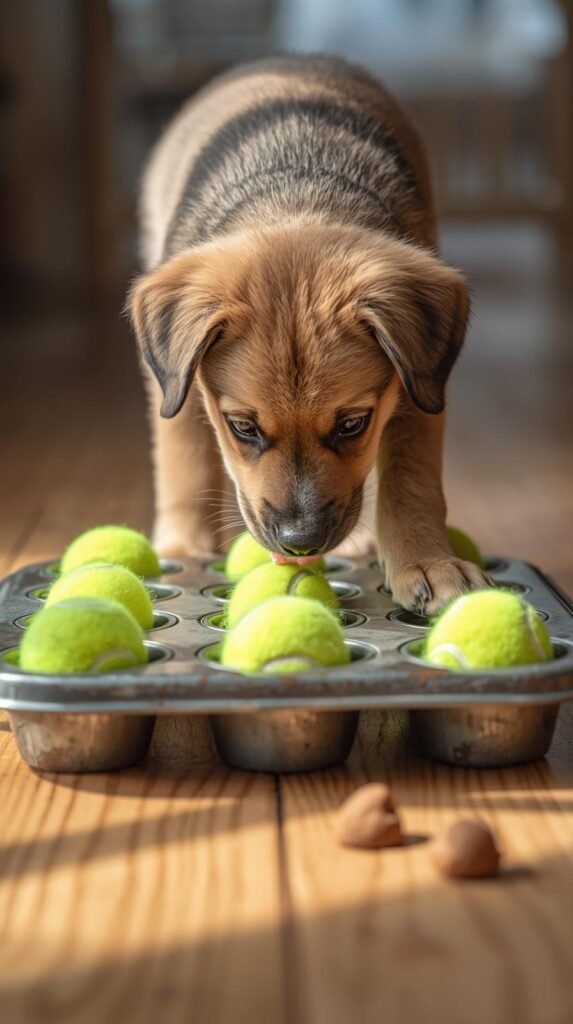
Before this game even starts, puppies usually pause. They sniff. They stare. They calculate. That is all you need to know. This puzzle makes puppies move more slowly and think, something a lot of puppies never do on their own.
I introduced this game on a day when my puppy felt extra wild. Within minutes, he focused completely. No barking. No chaos. Just problem-solving.
How to Make It
You need:
- One muffin tin
- Tennis balls or pet-safe balls
- Soft training treats
Place treats inside the muffin cups. Cover each cup with a ball. Let your puppy figure it out.
Why This Game Works
- Teaches cause and effect
- Builds problem-solving skills
- Encourages patience
This game also prevents fast eating, which helps digestion and reduces choking risks.
DIY Brain Game #2: Towel Roll Sniff Challenge
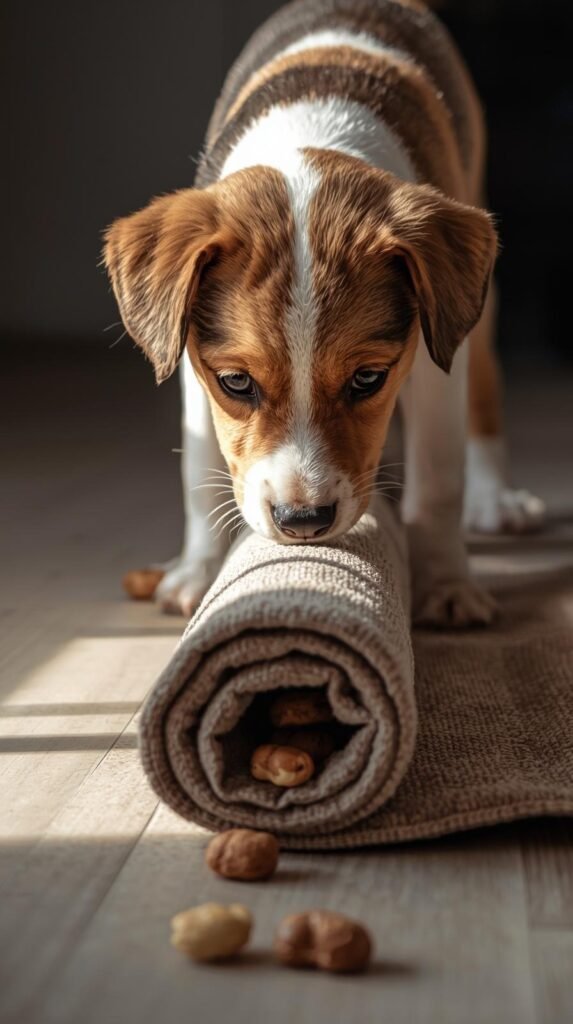
Dogs perceive the world in a holistic way and puppies are more dependent on the sense of smell. This game taps into that instinct immediately. The moment you roll up the towel, your puppy already knows something good hides inside.
This brain game feels calm but mentally demanding. I use it when my puppy needs focus without excitement.
How to Set It Up
- Lay a towel flat
- Sprinkle treats across the surface
- Roll the towel tightly
Your puppy must unroll it using its nose and paws.
Mental Benefits
- Strengthens nose work
- Improves coordination
- Builds confidence
This game works especially well for shy or anxious puppies.
DIY Brain Game #3: Cardboard Box Mystery Game
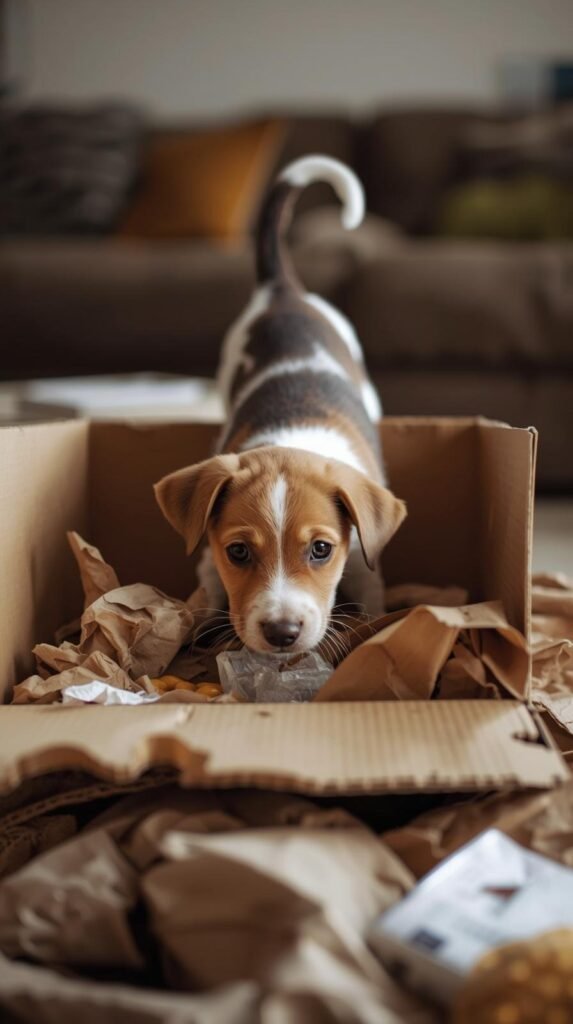
Puppies love surprises. Boxes trigger curiosity like nothing else. This game turns an ordinary box into an adventure zone.
When I introduced this game, my puppy jumped inside like he discovered buried treasure. That excitement fuels learning.
How to Create It
You’ll need:
- A cardboard box
- Crumpled paper or fabric
- Treats or toys
Hide treats under layers inside the box.
Why It Helps Puppies
- Encourages exploration
- Reduces fear of new objects
- Builds independent thinking
Rotate box sizes to keep the challenge fresh.
DIY Brain Game #4: Plastic Bottle Treat Spinner
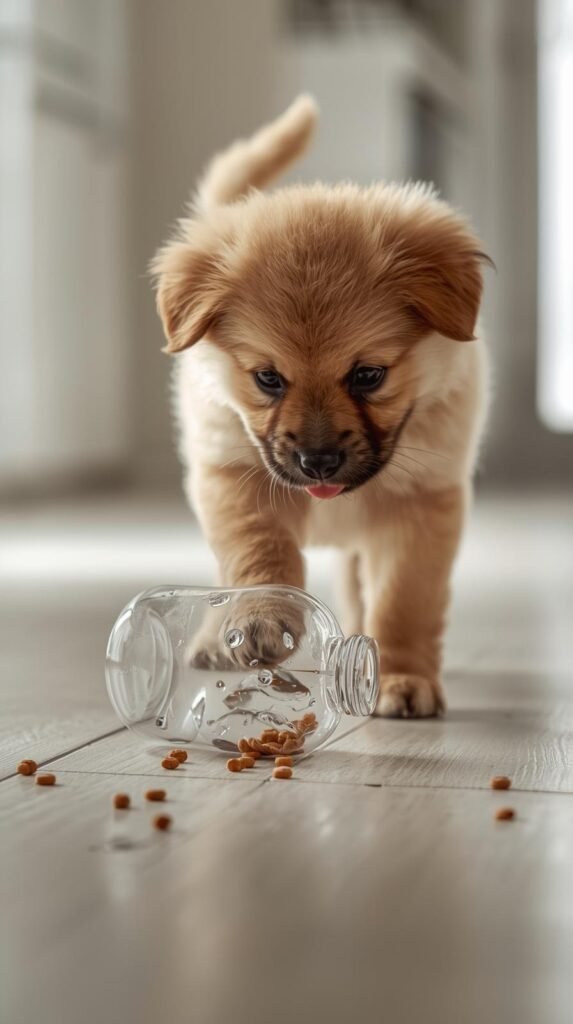
This game challenges puppies in a different way. Instead of digging or sniffing, they must manipulate an object. Puppies learn patience here, often after a few dramatic paw swipes.
This game feels especially rewarding for puppies who enjoy pawing at toys.
How to Make It
- Use an empty plastic bottle
- Cut small treat-sized holes
- Add treats and secure the cap
Your puppy must roll the bottle to release treats.
Skills This Game Builds
- Improves motor control
- Teaches cause and effect
- Builds persistence
Always supervise to prevent chewing.
DIY Brain Game #5: The Puppy Shell Game
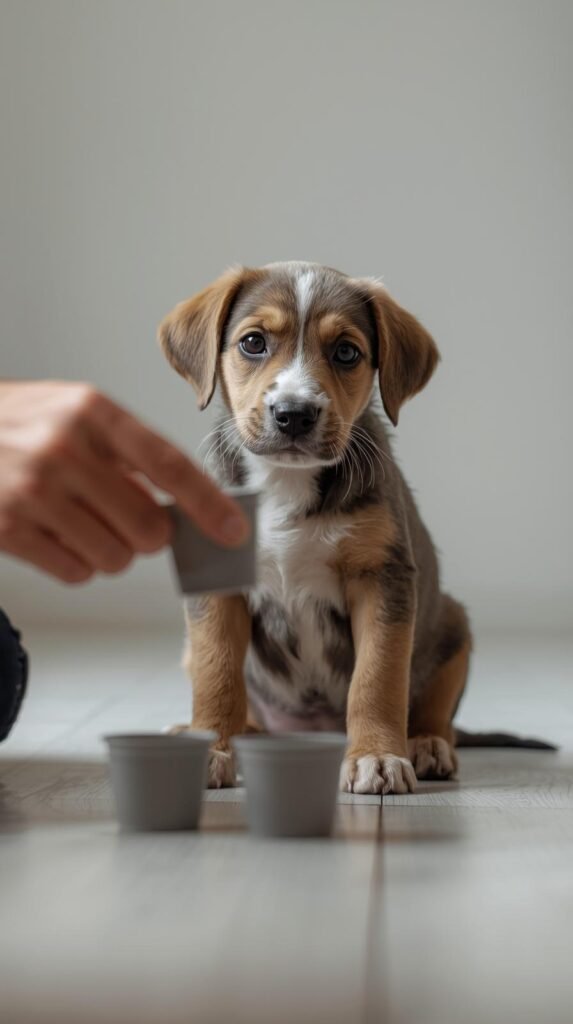
This game looks simple, but puppies must use memory, scent, and decision-making. Watching them hesitate before choosing feels oddly impressive.
I use this game during short training sessions to sharpen focus.
How to Play
- Use three cups
- Hide a treat under one
- Shuffle slowly
Encourage your puppy to choose.
Training Benefits
- Builds memory
- Sharpens nose skills
- Improves attention span
Start slow and increase difficulty gradually.
DIY Brain Game #6: Frozen Treat Puzzle Toy
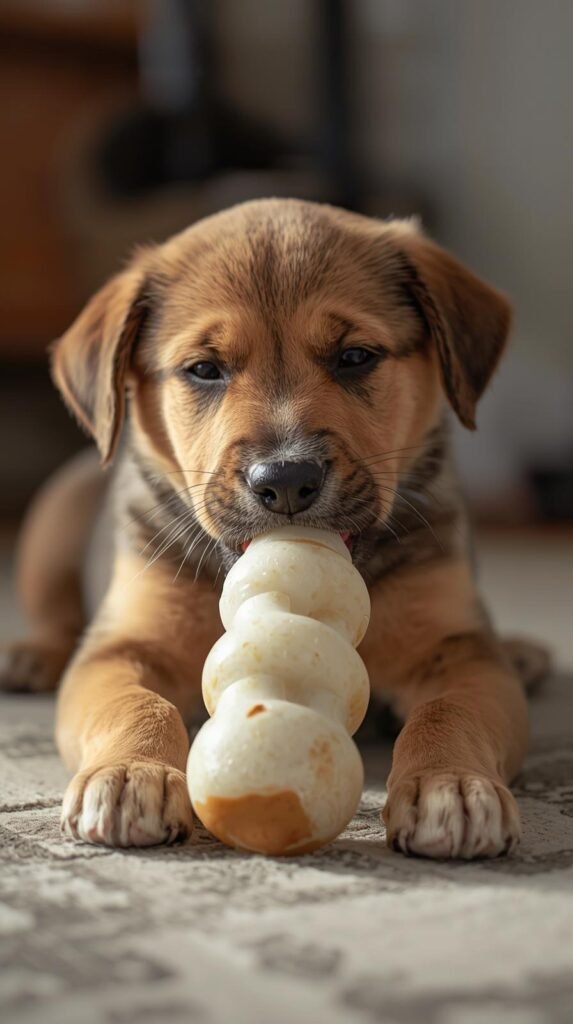
This game combines mental challenge with soothing comfort. Puppies love it during teething phases. The cold sensation calms gums while the challenge keeps the brain engaged.
This game saved my furniture during teething weeks
How to Prepare It
- Fill a Kong with yogurt or peanut butter
- Add fruit or kibble
- Freeze overnight
Why It Works So Well
- Teaches self-control
- Reduces stress
- Encourages calm behavior
Use this game when puppies feel overstimulated.
DIY Brain Game #7: Find-the-Treat Room Search
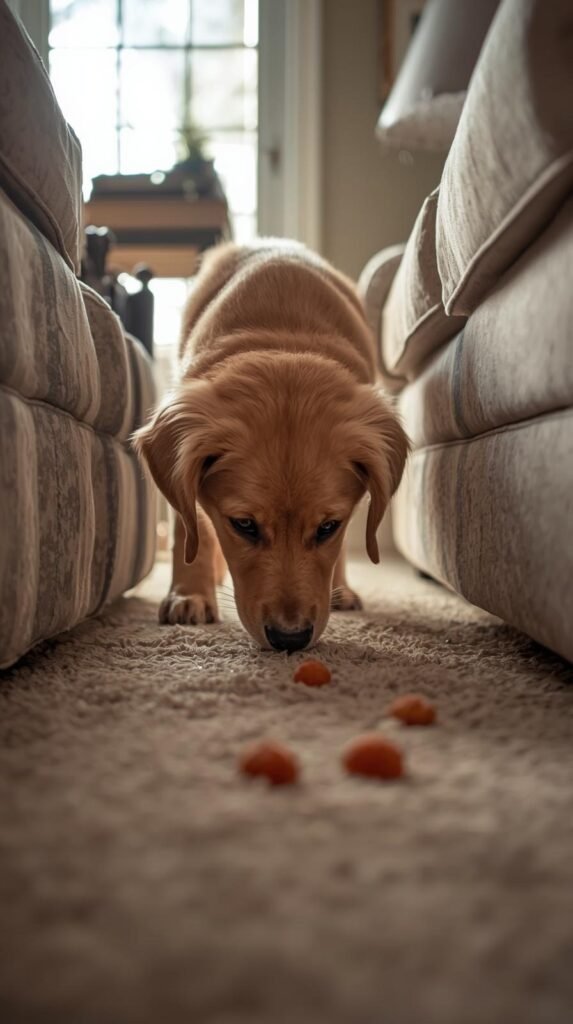
This game feels natural to dogs because it mimics hunting and tracking behavior. Puppies gain confidence as they succeed.
I start with easy hiding spots and increase difficulty over time.
How to Play
- Hide treats around one room
- Encourage sniffing
- Increase difficulty slowly
Mental Advantages
- Boosts confidence
- Builds focus
- Reduces anxiety
This game works especially well for energetic puppies.
How DIY Brain Games Compare to Store-Bought Toys
Store toys feel convenient, but they often lack adaptability.
DIY Brain Games
- Cost almost nothing
- Adjust difficulty easily
- Encourage creativity
Store Toys
- Durable
- Convenient
- Limited challenge levels
I combine both, but DIY games offer stronger mental workouts.
How Often Should Puppies Play Brain Games?
Puppies benefit from short, focused sessions.
I recommend:
- 10–15 minutes per session
- 1–2 sessions daily
- Rotate games weekly
It is safe to be consistent rather than be long.
Typical Puppy Owner Mistakes
Avoid:
- Making games too difficult too fast
- Leaving puppies unsupervised
- Repeating the same game daily
Brain games should challenge, not frustrate.
Signs Brain Games Are Working
Watch for:
- Calm behavior afterward
- Improved focus
- Reduced destructive habits
Mental stimulation reshapes behavior naturally.
Final Thoughts on Puppy Toys DIY Brain Games
Puppy Toys DIY Brain Games convert boredom into learning. You also do not require costly toys and trainers. You must be creative, patient and consistent.
I also observed my puppy become less nervous, more intelligent and more confident as a result of using these games every day.
Grab a towel, a box, or a muffin tin. Your puppy already waits for the next challenge.