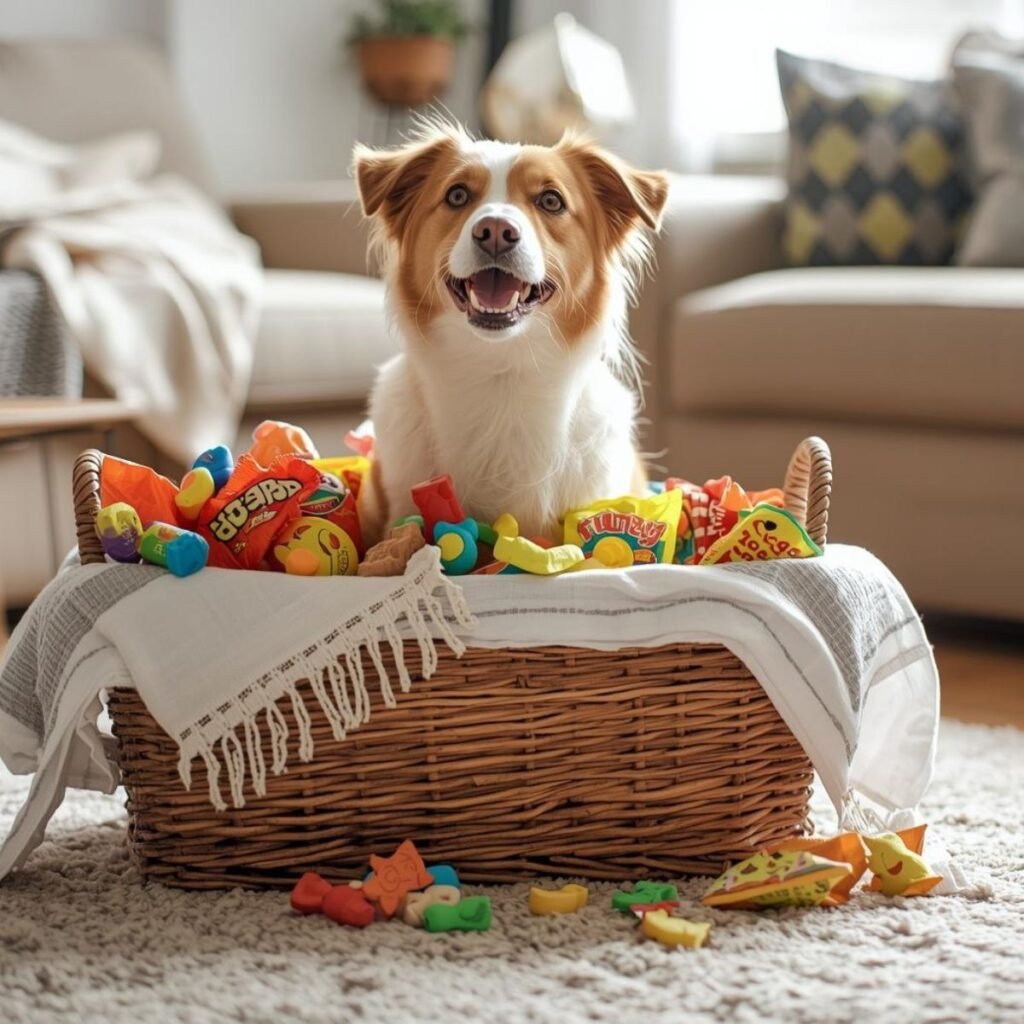

Every dog parent must have experienced this at least once.
You take your dog for a decent walk. Maybe even longer than usual.
You come home feeling accomplished… and your dog immediately grabs a toy and stares at you like, “Cool. What’s next?”
If that sounds familiar, here’s the truth most people don’t realize at first: physical exercise alone doesn’t fully tire most dogs out.
Dogs were bred to think, track, sniff, solve and make decisions. When they don’t get to do that, all that unused brain energy turns into chaos.
That’s where dog enrichment ideas that actually tire them out come in. Real enrichment doesn’t just burn energy, it satisfies instincts.
And once those instincts feel fulfilled, dogs settle in a way that no amount of fetch ever seems to accomplish.
Let’s walk through the enrichment ideas that actually work.
Table of Contents
Why Mental Enrichment Works Better Than Endless Exercise
A tired body helps. A tired mind tends to change things more noticeably.
When dogs have to think, sniff, choose and work something out, the energy goes somewhere different. A short stretch of focused mental effort often has more impact than a long stretch of physical activity.
That’s usually when behavior softens, naps get longer and those “why are you doing this?” moments start showing up less often.
Good enrichment tends to have a few things in common:
- It slows dogs down instead of winding them up
- It encourages focus and small problem-solving moments
- It leaves dogs settled, not overstimulated
None of that requires special training. Most of it comes down to how the activity feels to the dog.
Did you know?
Even just 5 minutes of thinking and sniffing can sometimes make your dog feel tired more than a long run. The mental effort helps them slow down and actually relax afterward.
1: Sniff-and-Find Treat Game

This one stands out because of how simple it is.
Treats hidden around a single room along baseboards, near furniture legs, under edges turn the space into something dogs read very differently.
At first most move fast, then the pace changes. That’s usually when the mental effort shows up. Less bouncing, and more focus simply.
Why it works:
Sniffing taps into a large part of how dogs experience the world. It’s natural, grounding and often more calming than physical exercise.
Best for:
- Anxious dogs
- Overstimulated dogs
- Rainy days
- Evening wind-down time
2: Food Scatter Feeding
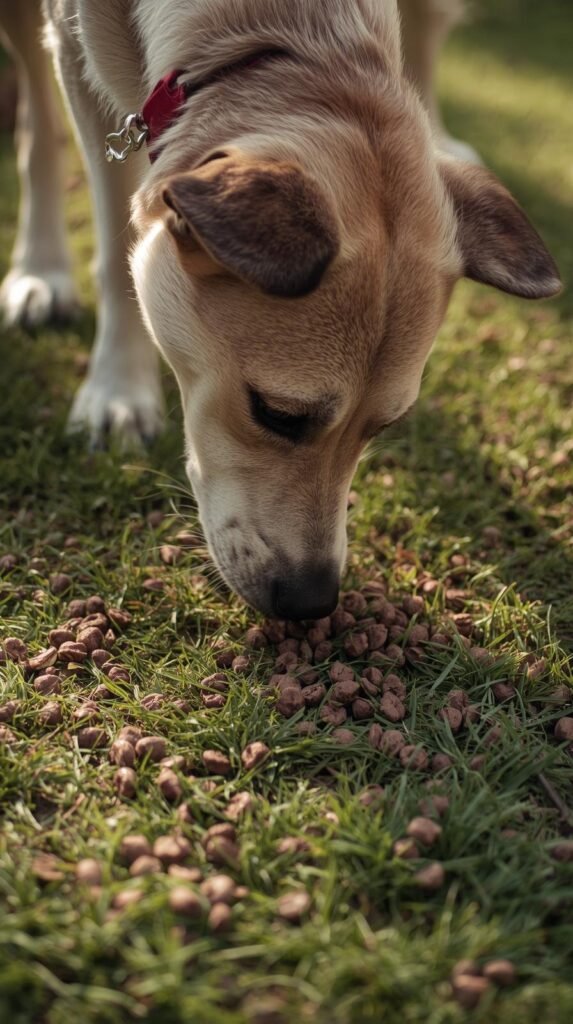
This one almost feels too obvious once you see it in action.
A meal spread out across grass, a snuffle mat or even a towel on the floor changes the whole experience.
Instead of rushing through it, dogs slow down and start searching piece by piece. The energy shifts from frantic to focused.
Nothing extra gets added to the day. It’s the same food, just approached differently.
Why it works:
Finding food engages natural foraging instincts and naturally stretches the moment out, both mentally and physically.
Best for:
- Fast eaters
- Dogs that get bored easily
- Dogs that do better with calmer mealtimes
3: Puzzle Rotation Challenge
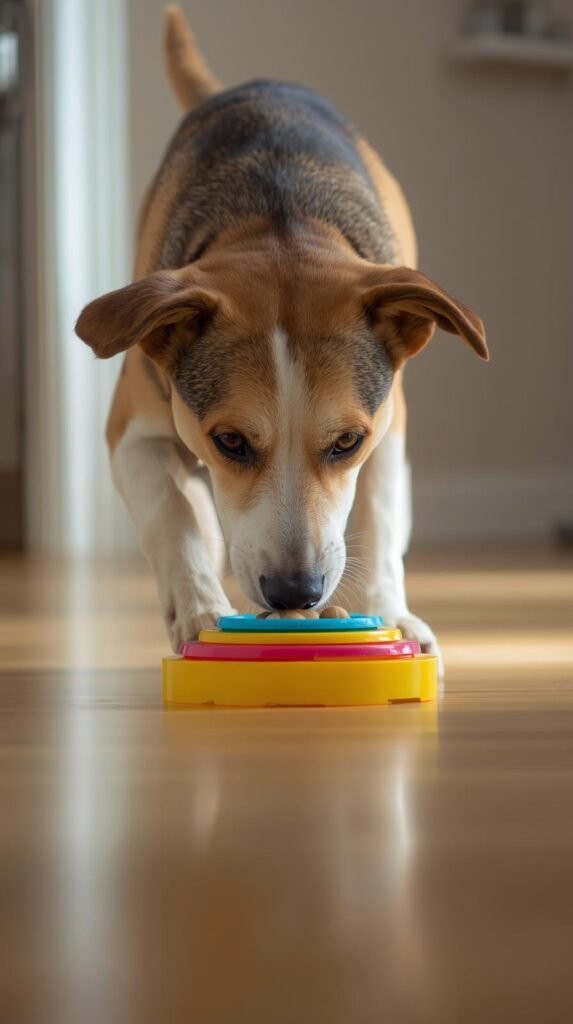
Puzzle toys can be great, right up until they stop being interesting.
Once a dog has something figured out, the challenge fades pretty quickly. The toy still works, but the thinking part disappears. That’s usually when it starts getting ignored.
What keeps things engaging is change. A sliding puzzle one day, a treat ball another, then something simple that needs flipping or nudging. Each one asks the dog to approach it a little differently.
Why dogs seem to respond to this:
New challenges require actual thinking instead of repeating something they already know.
Often a good fit for:
- Dogs that enjoy problem solving
- Dogs that lose interest fast
- Enrichment routines that need variety
4: DIY Obstacle Course at Home
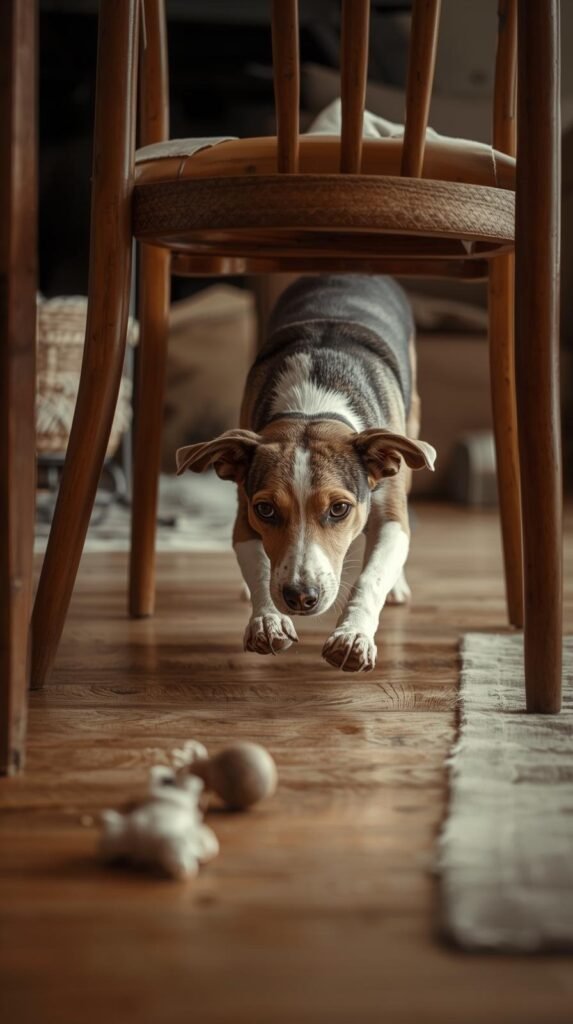
This kind of activity doesn’t require any special equipment.
Items in your home tend to do the job just fine. Chairs naturally become something to weave around. A broomstick turns into a low step-over. Cushions shift underfoot. Tables create a reason to slow down and crawl.
When dogs move through setups like this at an easy pace, the thinking starts to show. They pay attention to where their body is, what is coming next and how to pass through it without rushing. That mental focus does more work than speed ever could.
Why it works:
It combines movement with focus and body awareness that exhausts them in a more balanced, more consistent manner.
Best for:
- High-energy dogs
- Dogs that enjoy learning tasks
- Structured, low-chaos play sessions
5: “Which Hand?” Brain Game

This one looks almost too simple, but dogs tend to take it seriously.
A hidden treat and two closed hands turn into a quiet decision making game. Dogs watch closely, hesitate, then commit. The concentration shows up fast, even in dogs that usually rush through everything.
As the idea clicks, the focus deepens. Small changes in timing or position suddenly matter, and dogs stay locked in longer than you’d expect.
Why it works:
It asks them to observe, remember, and choose, all based on subtle cues instead of speed.
Best for:
- Indoor play
- Quick mental workouts
- Food-motivated dogs
6: Long-Line Exploration Walks
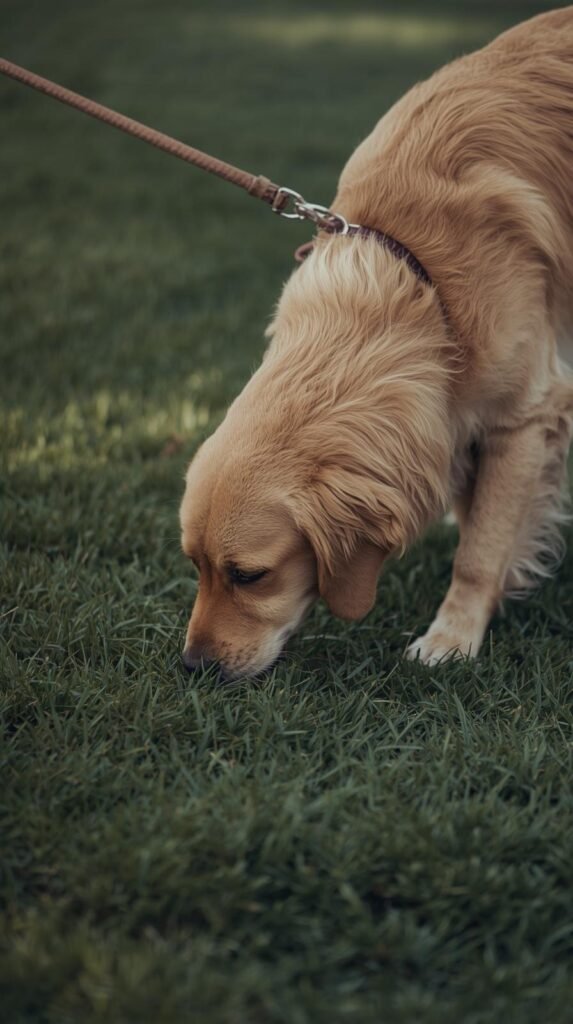
This doesn’t feel like a standard walk.
With more space on the leash, dogs tend to move differently. The pace slows and directions change.
There’s more stopping, more sniffing, more interest in what’s happening along the way. It’s less about covering ground and more about taking things in.
Distance matters less here than engagement. The walk looks quieter, but the dog is clearly doing more work.
Why it works:
Having choice like where to go, when to stop and what to investigate really activates the brain in a way structured walking doesn’t.
Best for:
- Dogs that pull on short leashes
- Scent-driven dogs
- Decompression-style walks
7: Frozen Lick-Time Sessions

Licking has a noticeably calming effect on most dogs. It tends to slow them down and settle their nervous system in a way other activities don’t.
Frozen, lickable foods in a safe container often turn into a quiet, absorbing experience.
Dogs ease into it, stay focused and relax as they go. It shows up most clearly during already calm moments, or when things around them feel a little more intense.
Why it works:
The repetitive motion encourages relaxation and helps reduce stress without adding stimulation.
Best for:
- Anxious dogs
- Crate time
- Low-key enrichment and settling periods
8: Trick Training With Micro Goals
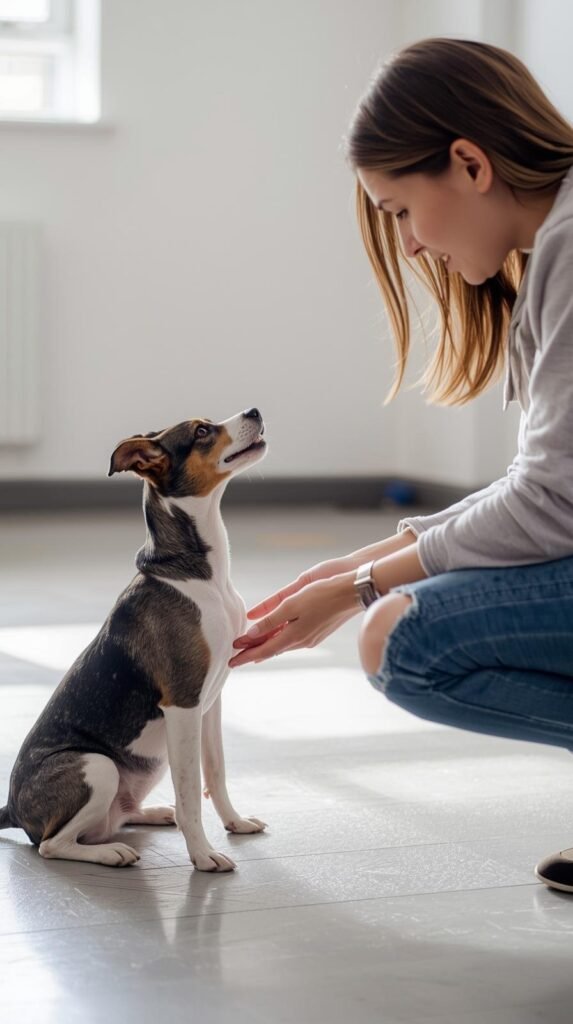
Mental work doesn’t have to be complicated to be effective.
Simple things like touch, spin, paw or place often ask more of a dog than they seem to on the surface. When learning happens in small pieces, dogs focus closely, remember what worked, and adjust as they go.
Short sessions tend to land best. Brief sessions are usually the most effective. Interest remains high, frustration remains low and the dog ends up feeling successful as opposed to feeling tired.
Why it works:
When we learn about something new, it is the combination of attention, self-control, and memory to be able to learn.
Best for:
- Dogs that like structure
- Bonding-focused play
- Daily routines that need mental engagement
9:Toy Hide-and-Seek

A favorite toy hidden somewhere out of sight turns into a surprisingly engaging search.
Dogs usually start with quick movement, then slow down as scent and memory take over. Noses work, paths get retraced, and the focus deepens as they zero in on where the toy ended up.
As hiding spots change, the challenge naturally grows. The game stays light, but the thinking underneath it is real.
Why it works:
It combines scent work, recall, and movement into what seems like playful but also requires concentration.
Best for:
- Toy-motivated dogs
- Indoor enrichment
- Activities the whole household can join in
How to Tell Enrichment Is Actually Working
You usually notice it in small ways first.
- Naps get longer and deeper.
- Pacing and whining show up less often.
- Destructive habits lose their appeal.
- Body language softens.
A mentally fulfilled dog doesn’t spend much time looking for trouble. They rest.
Common Enrichment Mistakes
It’s easy to overdo it.
Excessive novelty is too much and at times unhelpful. Not doing puzzles the whole day makes them less effective. And noise may seem like stimulation when it is no more than noise.
Enrichment does not make the dog wounded and instead makes the dog relaxed.
Final Thoughts
The enrichment ideas whose impact is the most significant are not generally difficult or costly. They’re intentional.
When dogs get chances to sniff, solve, choose, and learn, something shifts. Their needs get met at a deeper level, and home life starts to feel easier for everyone involved.
It’s not about having a dog that’s completely exhausted.
It’s about having a dog that feels fulfilled.
When that part clicks, a lot of other things fall into place on their own.