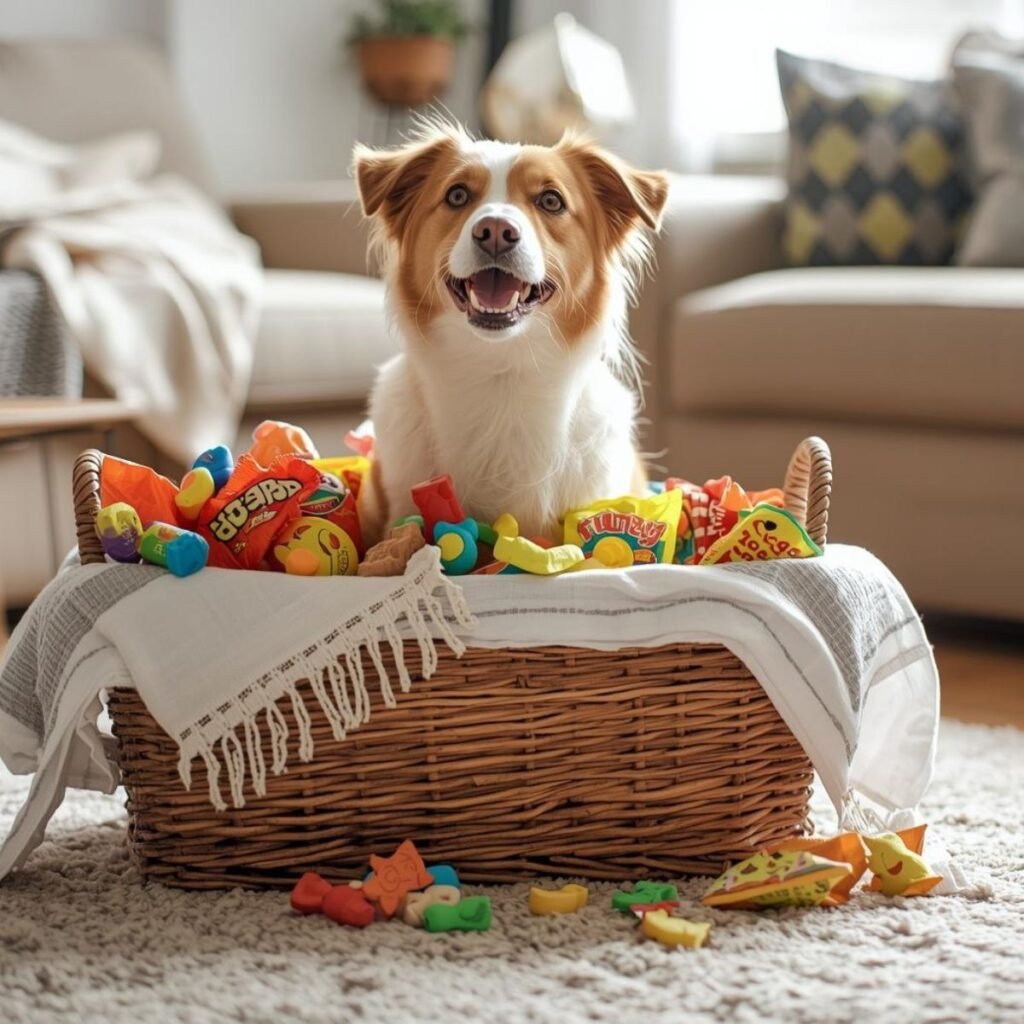
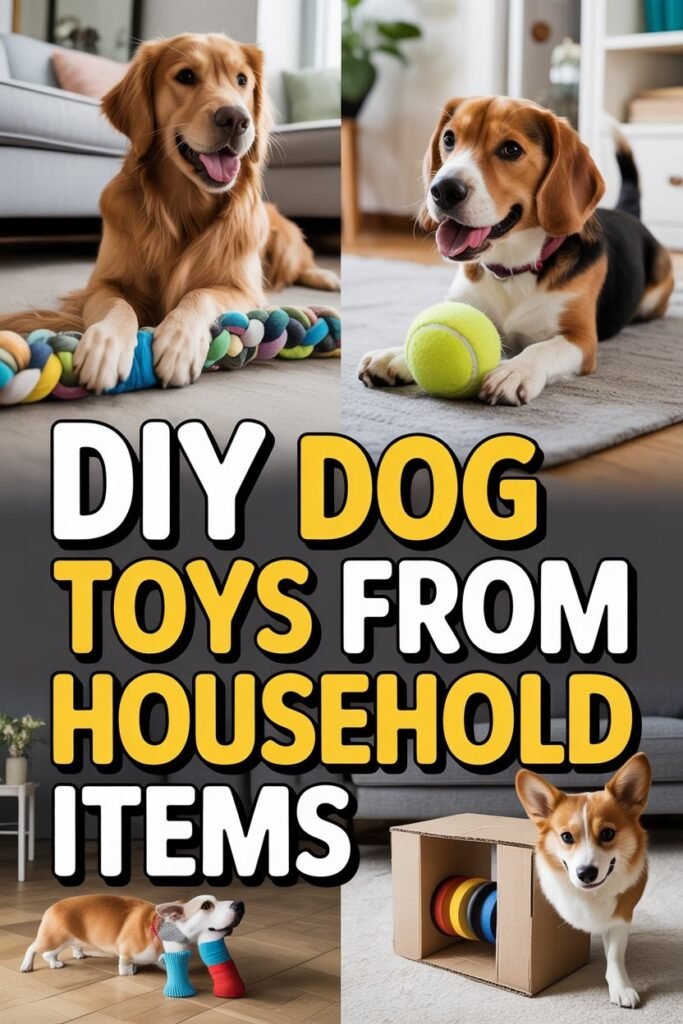
Let’s start with a hard truth most dog parents learn the slow way:
Dogs do not care how much a toy costs.
You can buy something labeled “ultra-durable,” “veterinarian approved” and “guaranteed to last”.
Your dog will still abandon it for a dish towel, a shoe lace or that one random object they absolutely should not have.
That is the point where DIY dog toys made from everyday household stuff really helps.
They are simple, fast ideas that use things already sitting in your home and turn them into something your dog actually wants to play with.
And when one gets destroyed? You just make another so simply no wasted money.
We will go through 11 different DIY dog toys, how they operate and what dogs are best suited to them.
Table of Contents
Why Everyday Household Items Make Great Dog Toys
Dogs don’t really approach toys the way people do. Branding, packaging and color coordination don’t register much.
What does seem to matter is a short list of things:
- Smell – especially anything that already feels familiar
- Texture – soft, crinkly or easy to grip
- Movement – objects that roll, slide or flip unexpectedly
- A bit of challenge – something to figure out or work at
Everyday household items tend to hit all of those without trying. They already smell like home, behave in slightly unpredictable ways, and don’t come with that “brand new” feeling some dogs hesitate around.
That’s usually why they get picked over store-bought toys, even when the fancy option is sitting right there.
Did you know?
A familiar household item can honestly be way more exciting than a fancy store-bought toy for your dog. It smells like home and moves in fun which instantly grabs their attention and keeps them curious.
1. Blanket Burrito Snuffle Toy
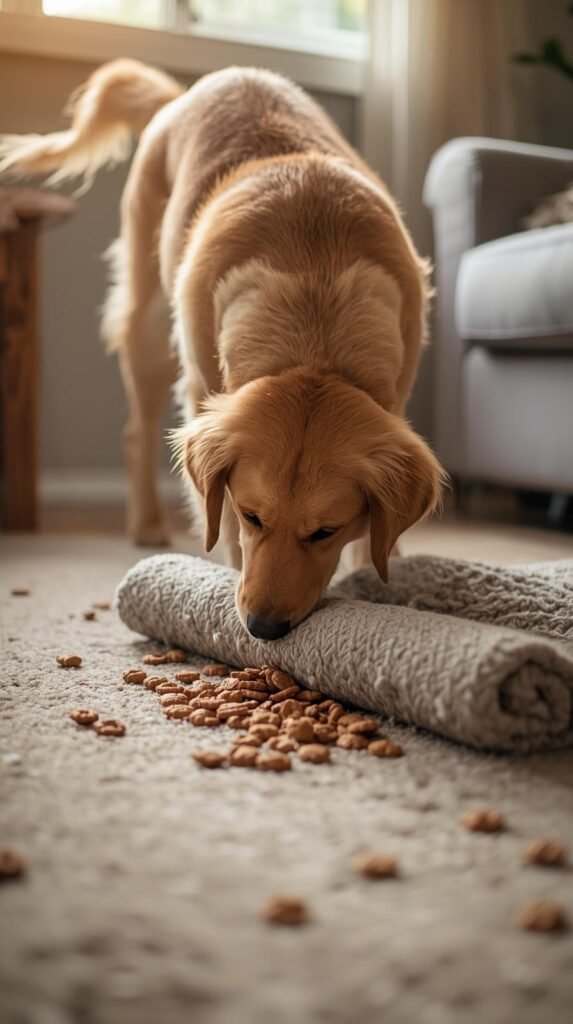
This one tends to work best when a dog needs something slower and more calming.
A small blanket or towel with treats scattered through it, loosely rolled up, turns into a quiet kind of puzzle. Dogs take their time with it, sniffing, unrolling and working through the layers instead of tearing straight in.
Sniffing does a different kind of work than running or chewing. It wears them out mentally, without winding them up. This feels more like a task than a challenge.
Why it works:
Food starts to become a smelling track rather than something to pick and run away with, which inherently becomes a slow process.
Best for:
- Anxious dogs
- Older dogs
- Rainy afternoons or quiet evenings
2. Wooden Spoon Treat Drag Toy
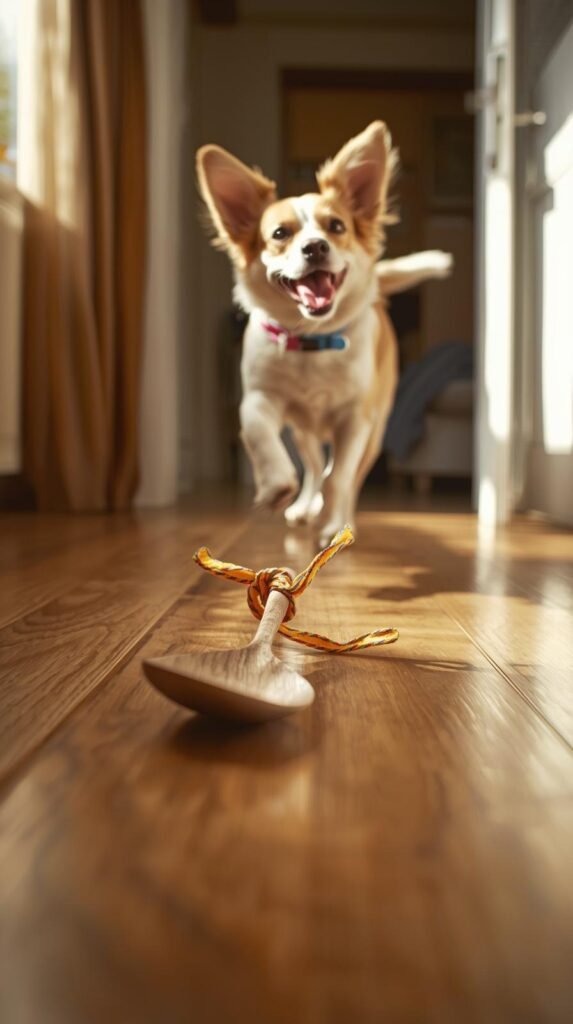
This one looks a little ridiculous at first, but dogs tend to take it very seriously.
A dish towel or strip of fabric tied to a wooden spoon handle turns into something oddly compelling. When it moves slowly along the floor, dogs lock in. The interest comes from the motion more than anything else.
Kept low and controlled, it taps into that stalk-and-pounce behavior without turning into chaos. Dogs get to chase, catch and “win” without feeling overwhelmed.
Why it works:
The movement resembles prey just enough, and the payoff comes quickly instead of dragging on.
Best for:
- High-energy dogs
- Indoor play
- Short, focused bursts of activity
3. Paper Towel Roll Treat Spinner
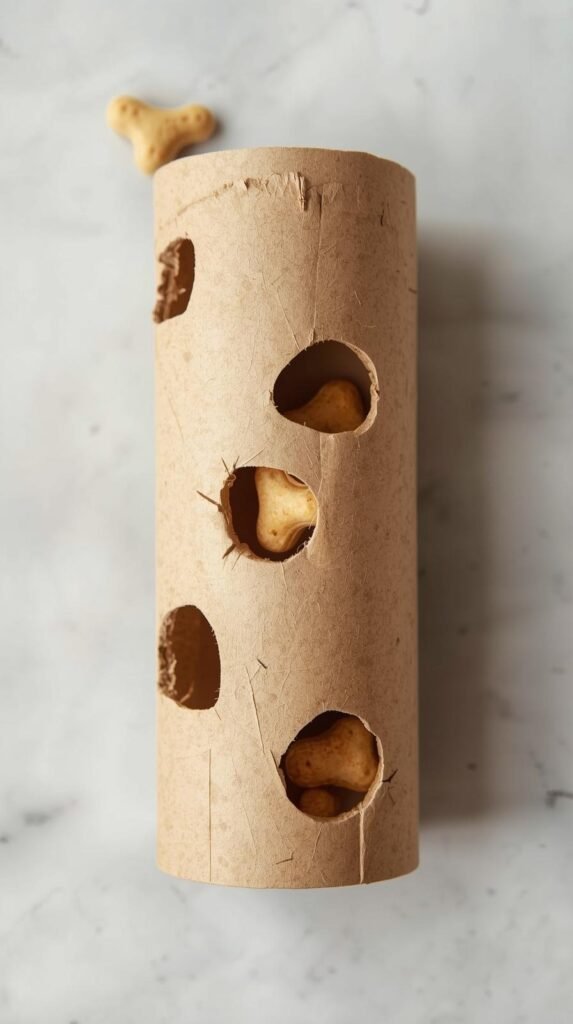
This one tends to work well as an entry level puzzle.
An empty paper towel roll, ends folded in and a few holes along the sides, turns into something dogs are curious about almost immediately.
When it rolls, treats drop out at random. This is exactly what keeps their attention longer.
It doesn’t hold up forever but it is simple, temporary, and does its job.
Why it works:
The movement combined with surprise rewards keeps things interesting without being overwhelming.
Best for:
- Curious dogs
- Gentle chewers
- Mental stimulation
4. Laundry Detergent Cap Puzzle
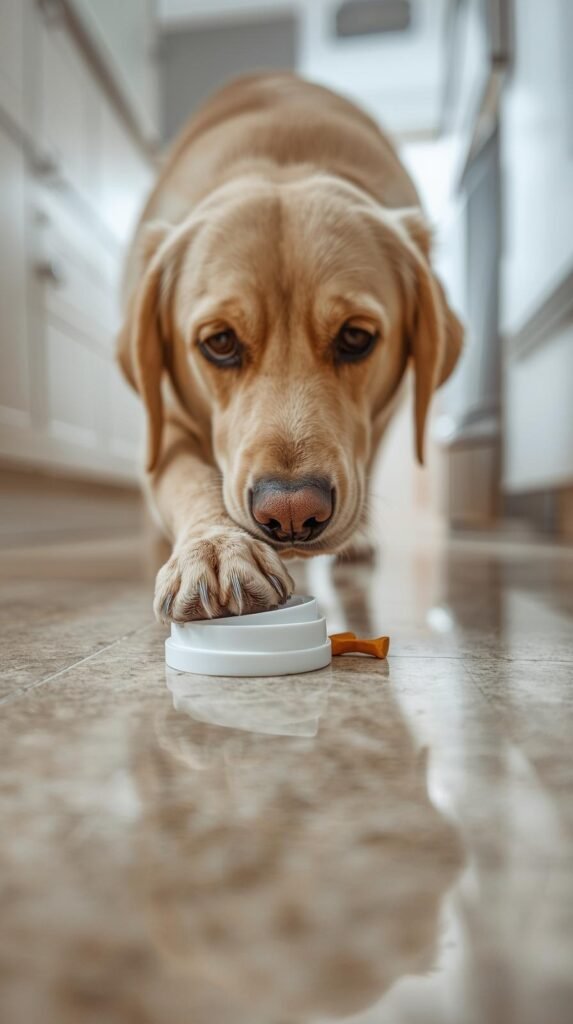
This one quietly builds confidence without making a big deal out of it.
A small detergent cap flipped upside down with a treat hidden underneath turns into a simple discovery game. At first, dogs usually just sniff and circle it.
Then comes a paw tap or a nose bump and suddenly the idea clicks.
Once that connection is made, the interest tends to grow. A few caps lined up can keep a dog engaged for longer than expected, all without raising their stress level.
Why it works:
It’s simple problem solving that builds confidence instead of frustration.
Best for:
- Dogs that like to think
- Short, focused play sessions
5. Scarf Hide-and-Seek Toy
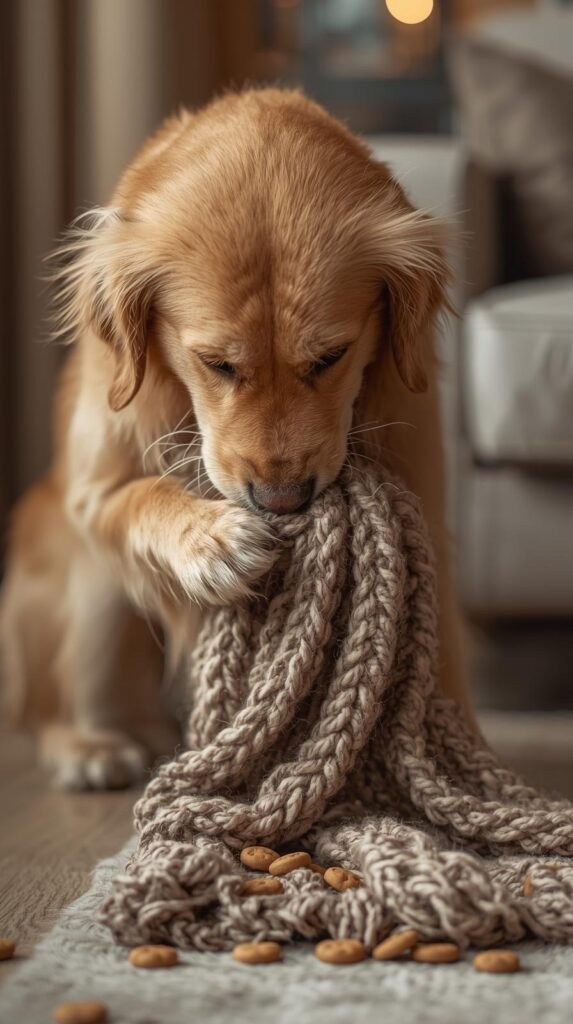
A long scarf with loose knots spaced along it turns into a surprisingly gentle puzzle.
The dogs can be slowed down with snacks between the folds or around the knots. It has a fair share of sniffing, the occasional pawing and just enough pulling to remain interesting.
Why it works:
It involves scent play and light play, which makes them interested without getting out of the control.
Best for:
- Calm dogs
- Indoor play
- Low-key enrichment
6. Mixing Bowl Flip Game
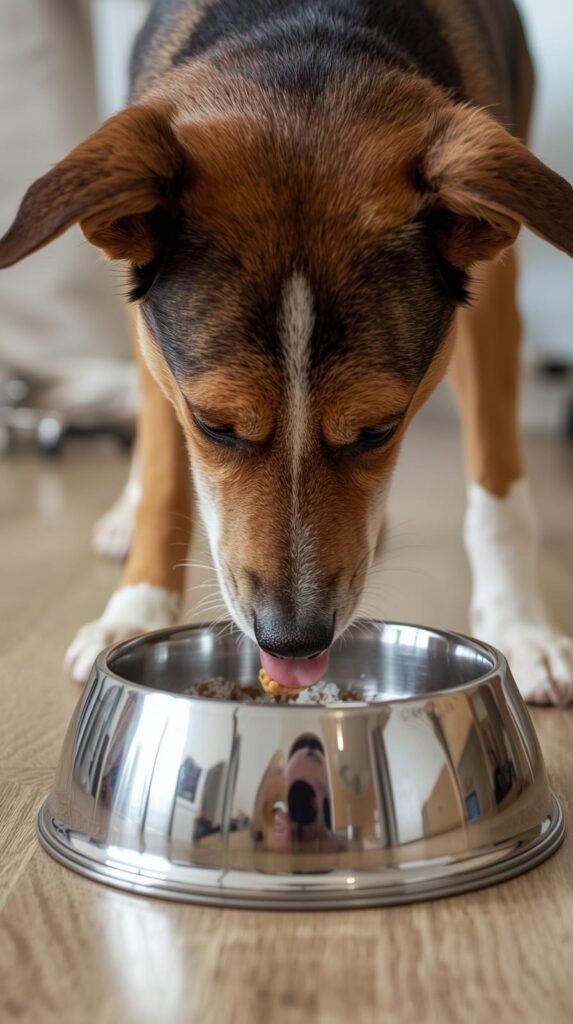
This one ends up being more effective than it looks.
Hidden treats under inverted mixing bowls become a basic yet captivating activity.
Dogs tend to begin sniffing, and soon learn that either tapping with the nose or knocking a bowl alters the situation.
As the idea clicks, the interest sticks. Adding more bowls just stretches the moment out a little longer without making it complicated.
Why it works:
They get clear cause-and-effect and a sense of control over what happens next.
Best for:
- Confident dogs
- Boredom relief
- Food-motivated pups
7. Shoelace Tug Chain
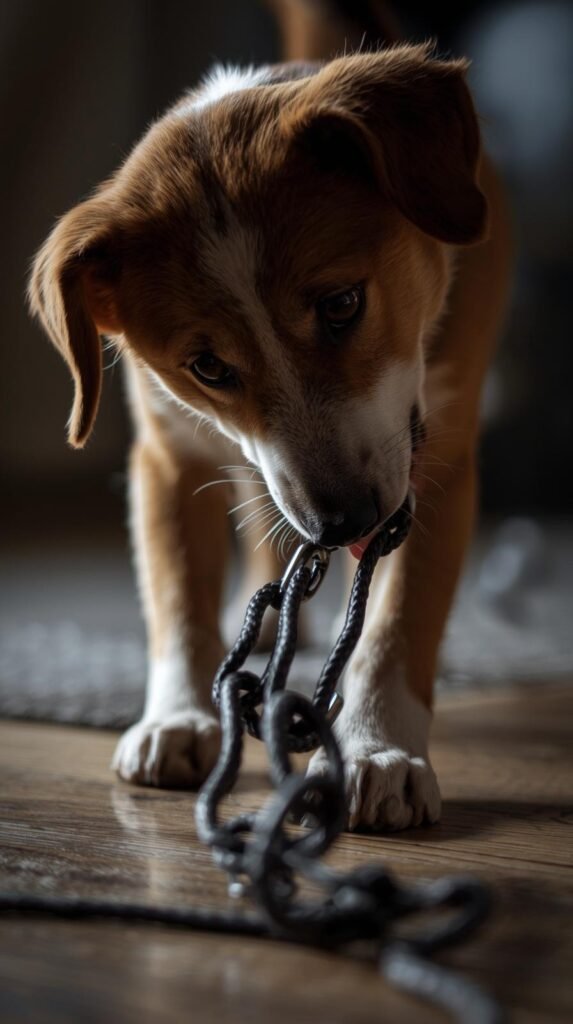
A chain of old shoelaces tied together ends up making a surprisingly useful tug toy.
It’s lightweight, flexible and easy for dogs to grab onto especially the smaller or gentler ones.
The movement stays loose and a little unpredictable, which seems to keep their interest longer than stiff toys do.
Why it works:
It bends, flops and shifts in a way that feels different every time.
Best for:
- Puppies
- Small dogs
- Light tug games
8. Bath Mat Dig Toy
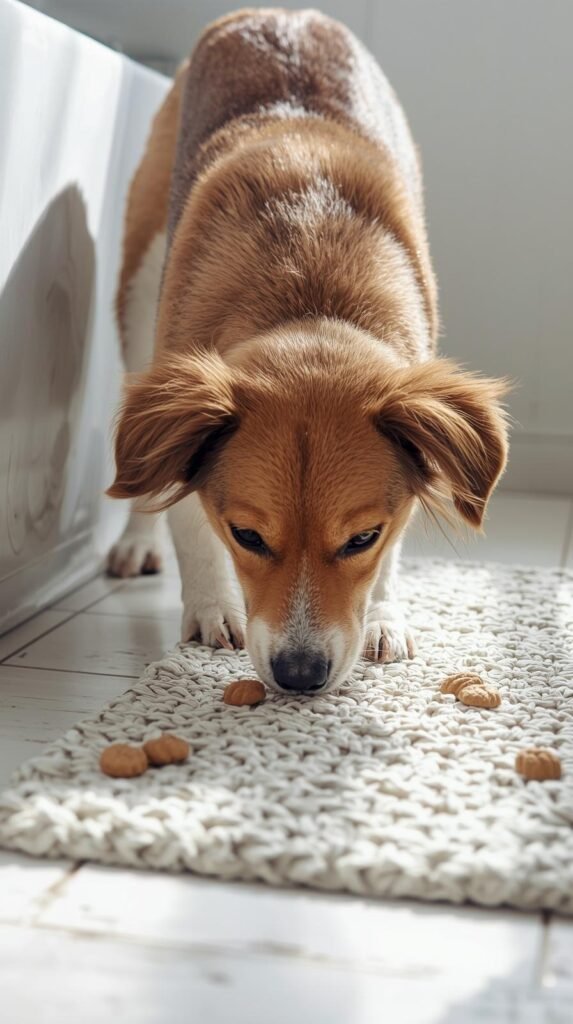
Dogs have a strong opinion about digging. Floors usually don’t agree.
A textured bath mat with treats hidden underneath gives them something to work at without wrecking anything nearby. There’s resistance, movement and just enough challenge to keep them focused.
Most dogs go straight into dig mode – nosing, pawing, rearranging and stay busy longer than expected.
Why it works:
It scratches the digging itch while still feeling safe and controlled indoors.
Best for:
- Dogs that love to dig
- Rainy days
- High-energy dogs stuck inside
9. Pillowcase Toy Stash
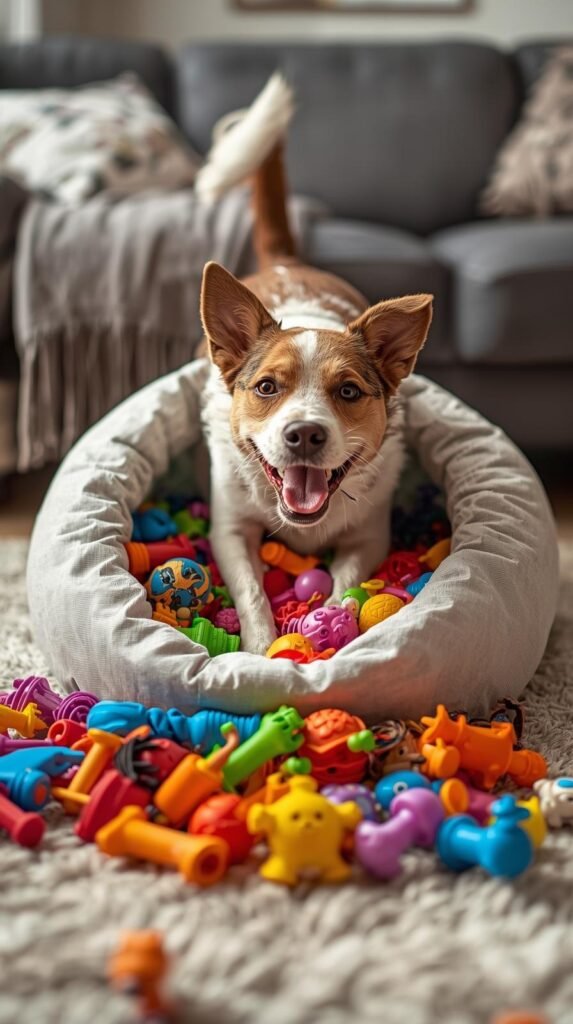
A pillowcase filled with a mix of toys and a few treats turns into something dogs take very seriously.
They dive in, pull things out one by one, shove their nose back inside and repeat like they’re convinced there’s something better still hiding at the bottom. It has a very “found treasure” energy to it.
Why it works:
It blends searching, tugging, and surprise into one activity that keeps changing as things get pulled out.
Best for:
- Dogs that love toys
- Homes with more than one dog
10. Oven Mitt Grab Toy
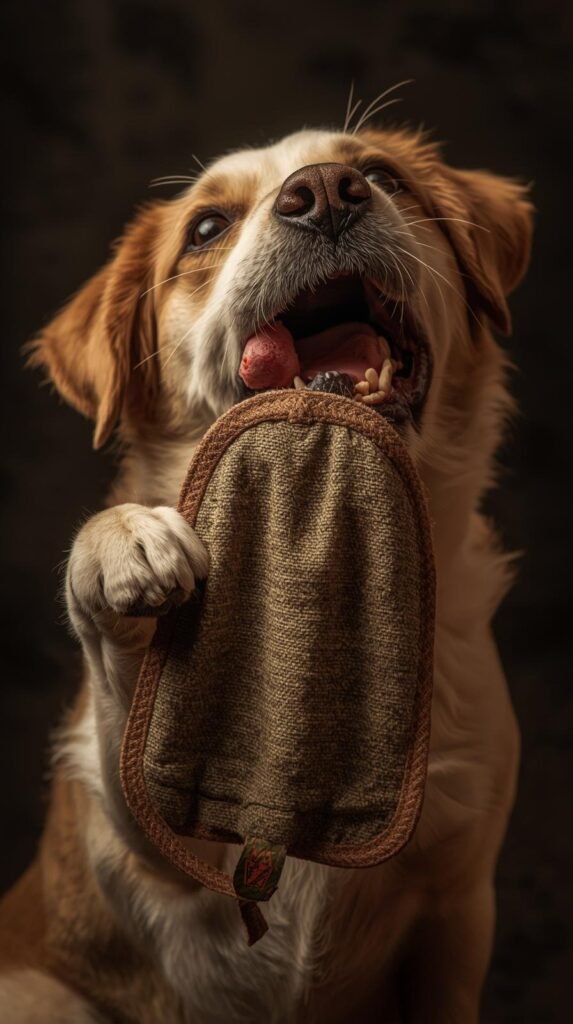
An old oven mitt with treats tucked into the fingers turns into a surprisingly engaging toy.
Dogs have a way of chewing, pulling and playing around it until they attain what they desire. The fabric remains soft and forgiving, although it is more durable than you would think of such a simple one.
Why it works:
The finger shapes make it feel interactive, almost like the toy responds as they work at it.
Best for:
- Gentle chewers
- Supervised play
11. Chair Leg Weave Game
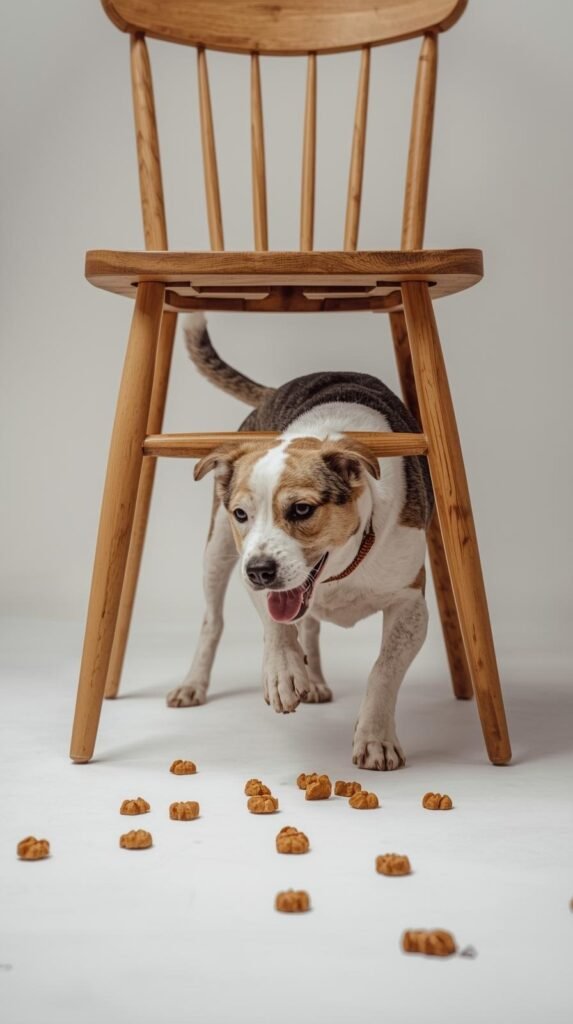
This one isn’t really about chewing. It’s more about movement and focus.
A few chair legs spaced just right, with treats scattered along a loose path, naturally turn into a weaving game. Dogs slow down while paying close attention and start moving with intention instead of bouncing off the walls.
It burns energy in a quieter way.
Why it works:
It feels structured and the rewards come from staying engaged rather than rushing.
Best for:
- Dogs that enjoy routine
- Training-style play
- Mental and physical balance
How to Keep DIY Toys Interesting
It turns out rotation matters more than having a pile of toys everywhere.
When only a few toys are out at a time, interest stays higher.
Bringing an old one back after a short break often gets the same reaction as something brand new. Dogs seem to respond more to novelty.
Clutter doesn’t add much, change does.
Safety Notes (Quick but Important)
New toys usually get a closer watch at first. Worn spots and loose pieces can easily be noticed once you know how a dog plays.
When regularly washed, items of fabrics tend to outlive their lifespan.
The best DIY toys are those that are kept simple and low-stress, rather than thought-provoking.
Final Thoughts
DIY dog toys created using the household items are not exactly about being crafty or cost-effective. They’re more about paying attention to how dogs actually play.
Perfection doesn’t register much but engagement and interaction does. Sometimes it’s just a weird object that smells like home and moves in an interesting way.
When a toy gets destroyed, it’s usually not a sign that it failed but can be the reason that it did what it was supposed to do. The dog had fun, stayed busy and moved on. That’s the point.