
When you live with a cat, you have loved and believed a lot.
Fur on your clothes. Random zoomies at 3 a.m. Sitting in “your” chair because your cat has chosen it to be theirs. But what is the most the cat owners never quite come to terms with? The litter box.
Even the neatest litter box feel awkward sitting in open air. The smell, the visual clutter, how the guests immediately can know the number of cats you have by just entering the door.
This issue becomes even more difficult in small houses or apartments where there is no place to conceal it without sacrificing all the layout.
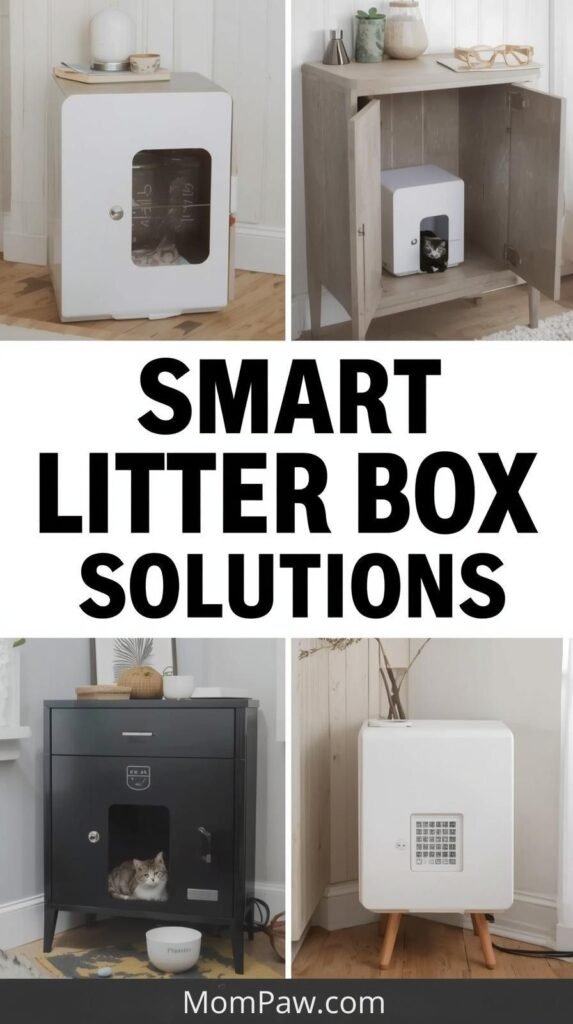
This is the reason why the concept of hidden cat litter boxes that do not smell is a game changer. Hidings the litter box when properly done can not only make your house look better, it can actually be simpler to control the odor of the litter box.
This article focuses on realistic, practical solutions that are applicable in everyday homes. Simple tricks on how to have litter boxes out of sight, odor-free and cat-friendly.
Table of Contents
Why Litter Box Smell Is Usually a Setup Problem
Before we talk about hiding litter boxes, it’s important to understand for those who are still unsure about why they smell.
Most litter box odor problems usually come from a few common things:
- Poor airflow
- Infrequent scooping
- Overcrowded boxes
- Wrong placement
It’s rarely just the litter itself. When a box sits out in the open but doesn’t get cleaned regularly, the smell spreads fast.
On the flip side, when a box is hidden correctly with ventilation, access and routine, it can actually stay fresher.
The goal isn’t to trap odor. The goal is to control where it goes and how long it stays.
1: Furniture-Style Litter Box Cabinets That Blend In
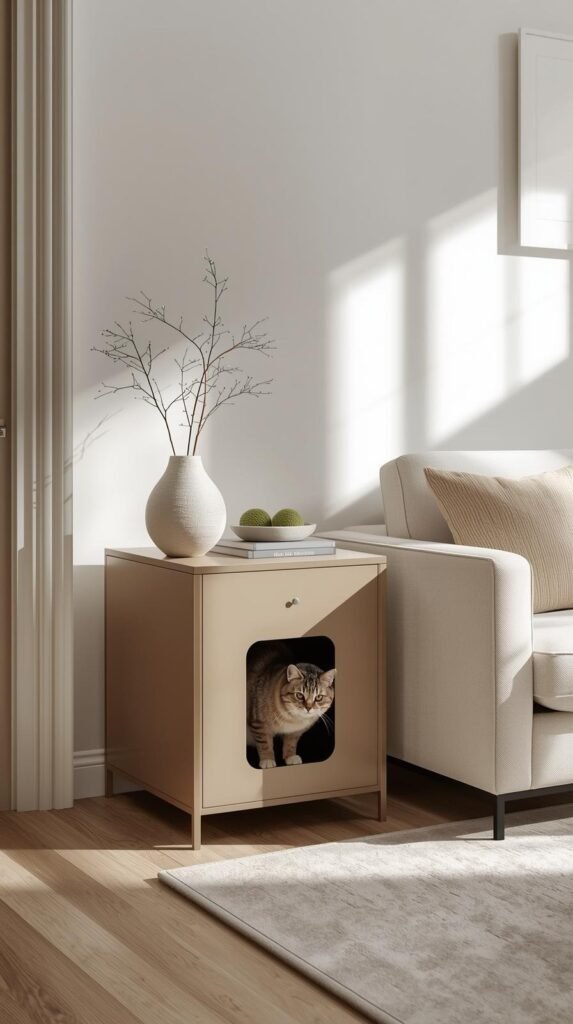
One of the most effective and popular idea is litter box cabinets which resemble real furniture.
Such enclosures are like side tables, storage benches or console units and therefore can be conveniently used in the living rooms, bedrooms or corridors without attracting attention.
Good cabinets include:
- Side or rear entry for the cat
- Litter mat interior space.
- Gaps or vents for airflow
Since the box is placed within a certain area, litter scattering will remain in the same area and smells will not permeate the room.
Consistency is what makes them really work. When there is a home in the box, cleaning will become routine rather than something you keep on deferring.
2: Hiding the Litter Box Inside Bathroom Vanities
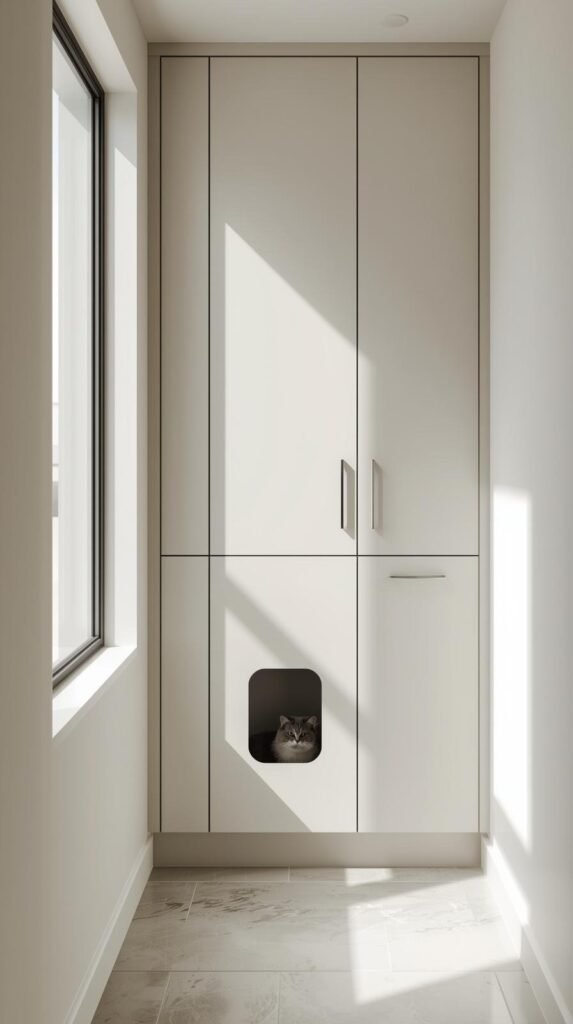
Bathrooms are already humid, fragrant and often cleaned and therefore hiding a litter box behind would be a good location choice.
In case there is an excess space in your vanity, a litter box that fits under it surprisingly is a good idea to remove a shelf. A small hole in the door or side will enable easy entrance of your cat and the box will be out of sight.
Bathrooms often have:
- Exhaust fans
- Tile floors
- Easy cleanup
All these aid in eliminating the lingering odors.
You can get used to cleaning every day and keeping cleaning supplies within the reach as such arrangement is the best scenario when you do not want anything to accumulate.
3: Entryway Benches That Secretly Hold a Litter Box
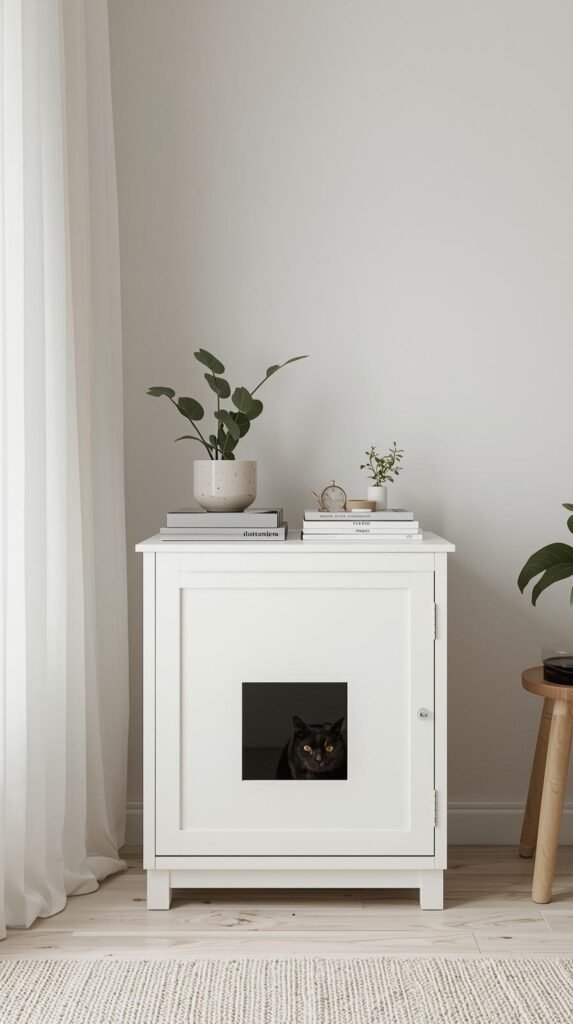
The doorways are the next area that is not considered at all when placing litter boxes, and they can be surprisingly efficient.
Storage bench that has interior space may be used as a litter box enclosure (undercover). Externally, it appears like a regular piece of furniture. It has everything well packaged within.
This is effective in particular when it comes to an apartment where space is a limited factor and all furniture must be versatile.
Since the entryways usually have more airways than closed rooms, the odor is not so persistent and a charcoal deodorizer in the bench should be added.
4: Laundry Rooms as Litter Box Zones
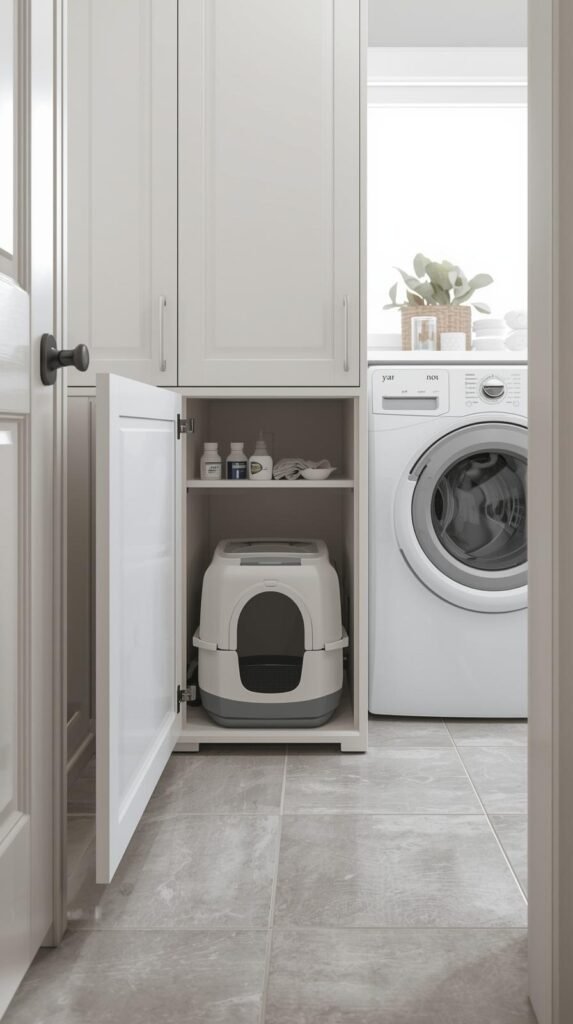
Laundry rooms may not be glamorous, but they’re practical and that’s exactly why they work so well for litter boxes.
These rooms usually have:
- Hard, washable floors
- Ventilation
- Less foot traffic
Enclosing or putting the litter box in a cabinet in the laundry room ensures that the odors do not get into the areas of the main living room, but ensure that your cat can also use the litter box easily.
It is also easy to clean up as nothing is dispersed in another functional area.
5: Budget-Friendly IKEA Hack Litter Box Enclosures
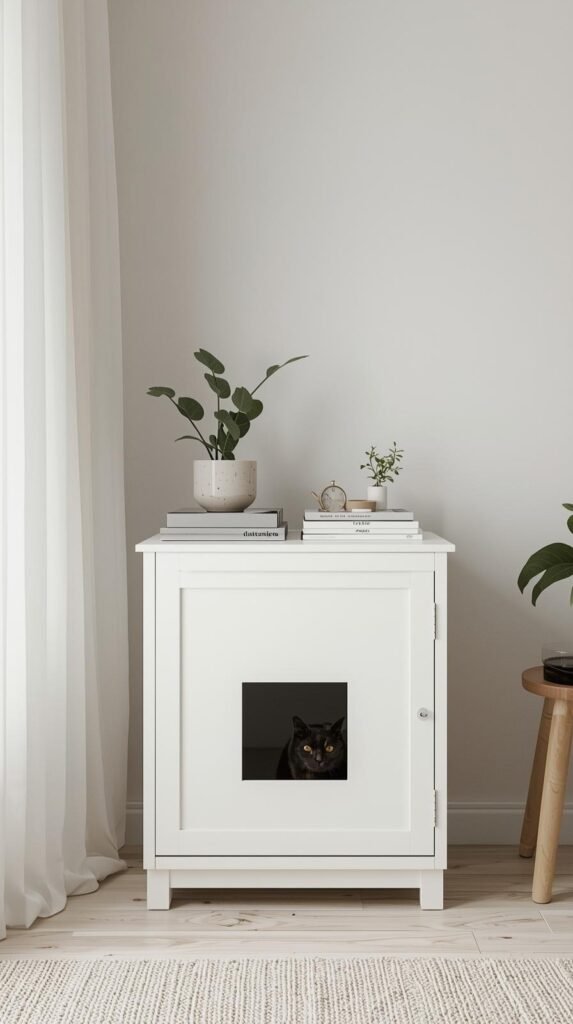
IKEA hacks are popular for a reason: they’re affordable, customizable, and surprisingly stylish.
Many people convert sideboards, TV stands, or storage units into hidden litter box furniture by:
- Cutting a small entry hole
- Adding ventilation openings
- Using removable mats for easy cleaning
The benefit in this case is control. Making a home-made enclosure means that you can tailor size, airflow, and location to suit your house rather than attempting to squeeze in a store-bought enclosure.
When properly arranged, they appear purposeful and smooth with no one being aware that there is a litter box concealed.
6: Plant-Covered Litter Box Corners That Stay Fresh
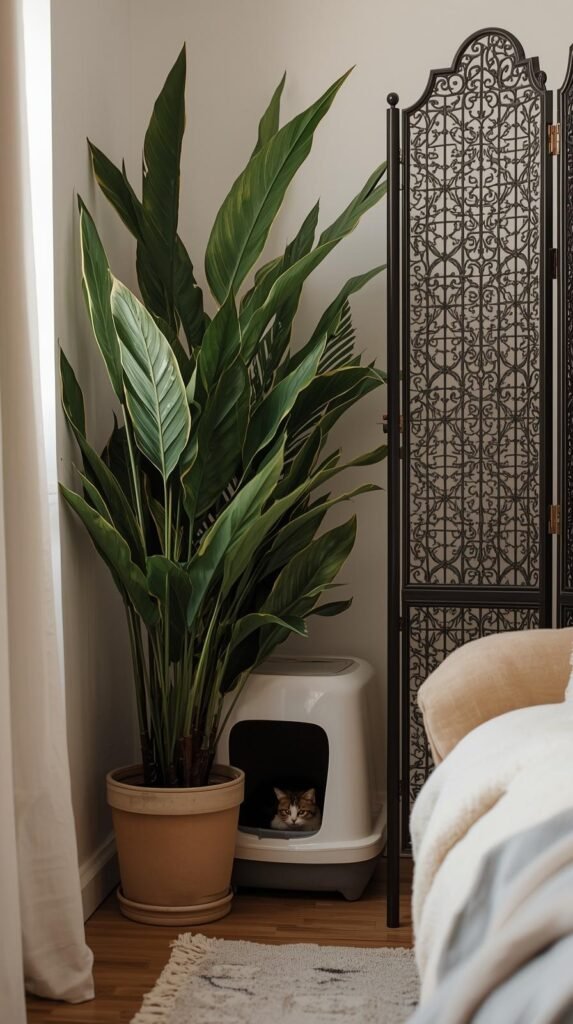
Plant-based concealment can be a good choice, in case you want something less enclosed.
The litter box can be visually blocked by tall faux plants, or decorative screens or open shelves but should not be closed. This technique is effective with cats that do not prefer to be in enclosed areas.
The key here is cleanliness. The box is not completely closed, so it makes scooping the box even more essential every day.
This alternative is suitable in small apartments where each walled cabinet is excessive.
7: Under-Stair Litter Box Nooks That Use Dead Space
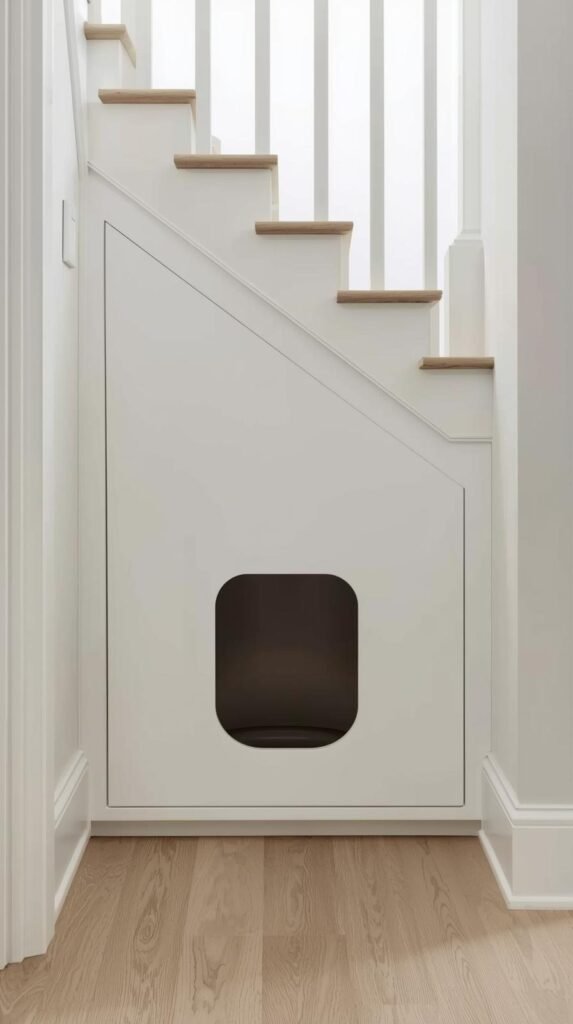
Homes with staircases often have unused space underneath and that space is perfect for a hidden litter box.
You can:
- Add a small door
- Use a curtain or panel
- Install a cabinet insert
This creates a dedicated litter area that’s completely out of sight and separate from daily living zones.
Because it’s a defined space, odors stay localized, and cleaning feels less disruptive.
8: Closet Litter Box Setups (Done the Right Way)
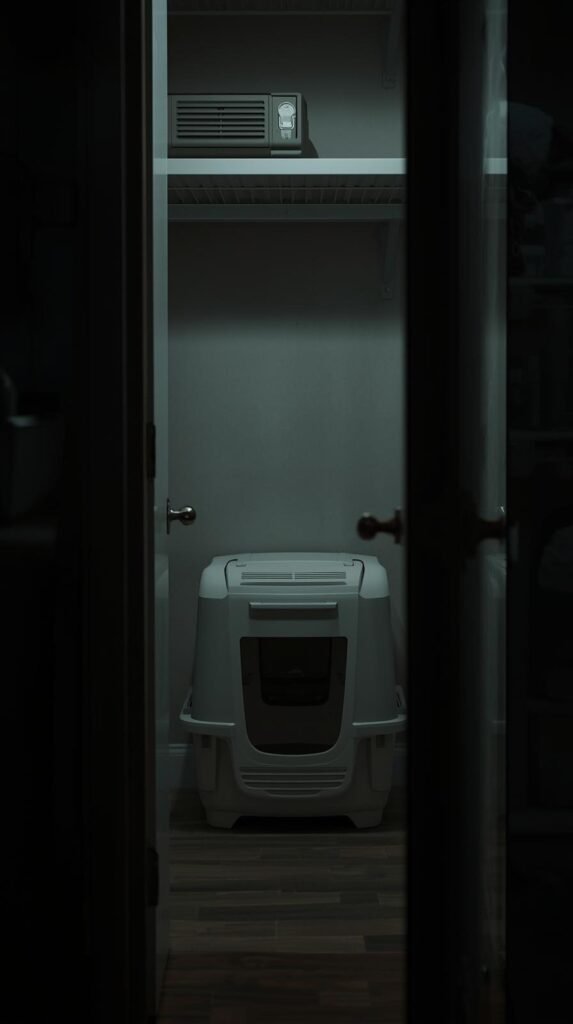
Closets may be useful with litter boxes, but only when they are organized.
The big error that they do is that they close the door completely and overlook the air flow. In a litter box, a closet must always be equipped with:
- Ventilation
- Easy access
- Regular cleaning
It is a big difference in leaving the door slightly open or having a vented panel. It is even better with an addition of an air purifier or charcoal deodorizer.
It is a good installation in houses whose closets are free or unutilized storage space.
9: Multi-Cat Homes and Hidden Litter Box Planning
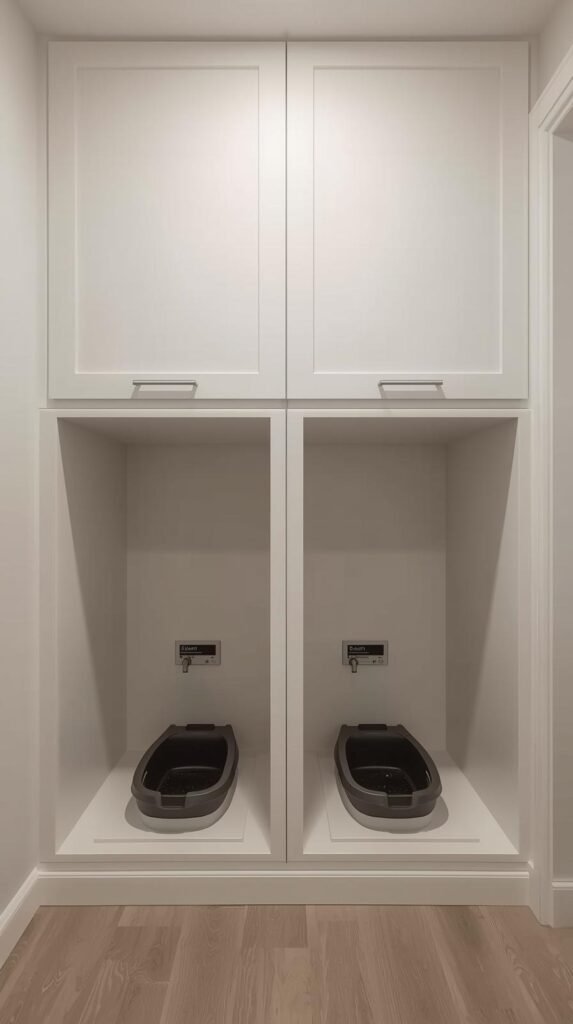
In homes with more than one cat, hiding litter boxes takes extra planning.
A cat should have its own box, which should be positioned in various places. Efforts to conceal several boxes in a single enclosure can usually result in congestion and smell.
Using multiple hidden setups throughout the home:
- Reduces competition
- Improves hygiene
- Keeps smells manageable
Spacing matters just as much as design.
Daily Habits That Keep Hidden Litter Boxes Smelling Fresh
No matter how beautiful the setup is, odor control comes down to routine.
The most effective habits include:
- Scooping once a day
- Wiping down surfaces weekly
- Replacing litter regularly
- Using odor-absorbing materials
The secret litter boxes are most effective when they become a part of your everyday routine, not an object you are not to think about.
Common Mistakes That Make Smell Worse
- Fully sealing boxes with no ventilation
- Choosing style over your cat’s comfort
- Skipping daily scooping because it’s “hidden”
- Placing boxes near food or sleeping areas
In case your cat does not want to enter the box, the arrangement must change, regardless of how nice it appears.
Final Thoughts
Hidden cat litter box ideas that don’t smell aren’t about hiding a problem. They’re about designing smarter solutions that work with your home, your routine, and your cat’s needs.
You don’t need a bigger space.
You do not require the costly devices.
All that you have to do is be thoughtful in placement, airflow and consistency. When the litter box no longer appears to the eye and the smell is well withheld, you will wonder why you did not do it before.