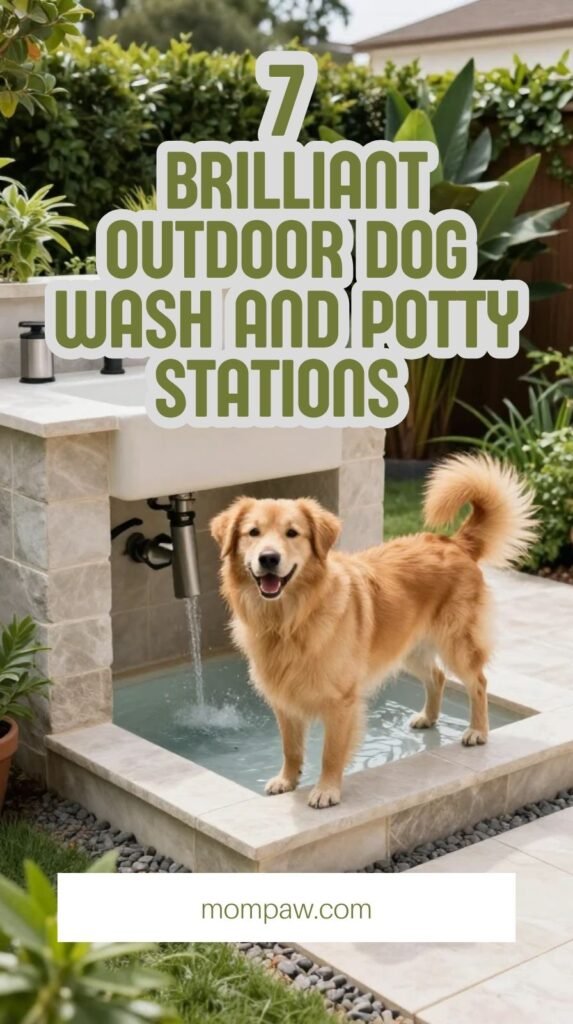
Most dog owners go straight for the obvious solution: a hose by the back door. You drag it over, your dog panics, water goes everywhere, and you end up wetter than they do. By the time you’ve wrestled them dry enough to come inside, the mud’s already on the doormat. So much for a quick rinse.
The real fix isn’t more water pressure — it’s a dedicated outdoor dog wash and potty station designed to actually fit your yard and your routine. I learned this after too many winters of chasing Max around the garden with a garden hose while wearing my good coat. Once I set up a proper station, the whole muddy-paw situation went from genuinely stressful to something I barely think about.
Below are seven setups that range from compact and budget-friendly to full built-in installations. There’s something workable here for every yard size, climate, and budget — including yours.
1. The Modern Outdoor Dog Sink and Potty Station
Clean, Sleek, and Seriously Functional
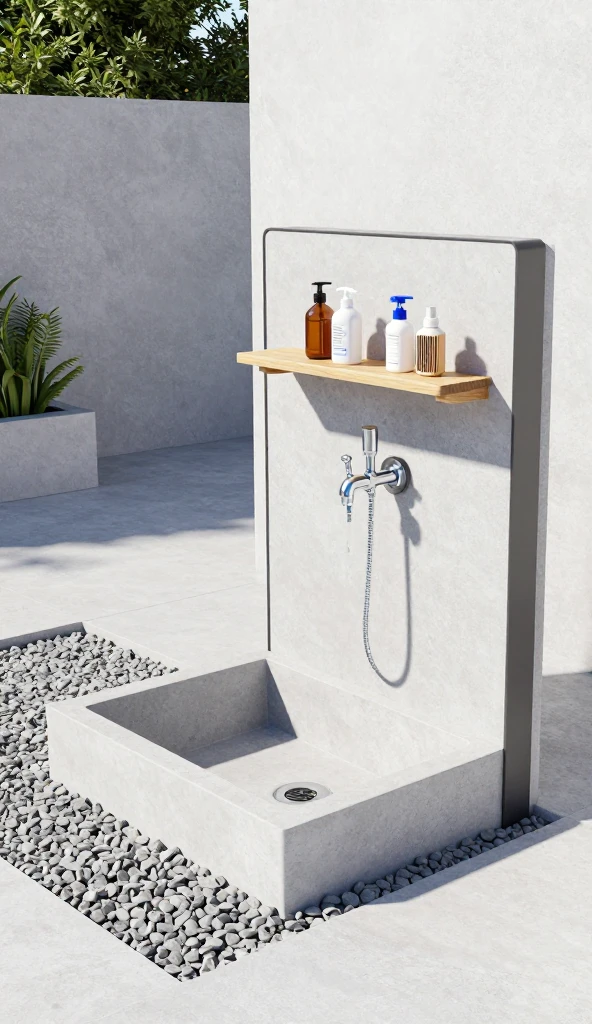
If you want your outdoor dog setup to look intentional rather than improvised, a built-in outdoor dog sink is worth considering from the start. This design pairs a raised concrete or stone wash basin with an adjacent potty zone, giving you a single, dedicated area that handles both needs without any awkward compromise.
The raised basin is the star of the show here. Standing-height washing means no hunching over, no bad back, and no wrestling a reluctant dog down to ground level. Everything is within reach, everything drains properly, and it looks like it belongs in the yard rather than being an afterthought.
A solid modern sink station includes:
- A raised wash basin (concrete or stone) at a comfortable working height
- A hose attachment or handheld sprayer for rinsing paws, legs, and belly
- A gravel or artificial turf potty section positioned just beside the wash area, with proper drainage beneath
- Wall-mounted shelving for shampoo, towels, brushes, and waste bags
This style suits contemporary backyards well. It reads as a design feature, not just a utility area — and that matters if you spend time outside and actually care what your yard looks like.
2. Backyard Dog Wash Station Right Beside the Patio
The Most Convenient Layout for Everyday Use
Here’s something that took me embarrassingly long to figure out: location matters more than almost anything else in a dog station setup. A beautiful station at the far end of your garden is one you’ll use on good days. A station right beside your back door is one you’ll use every day.
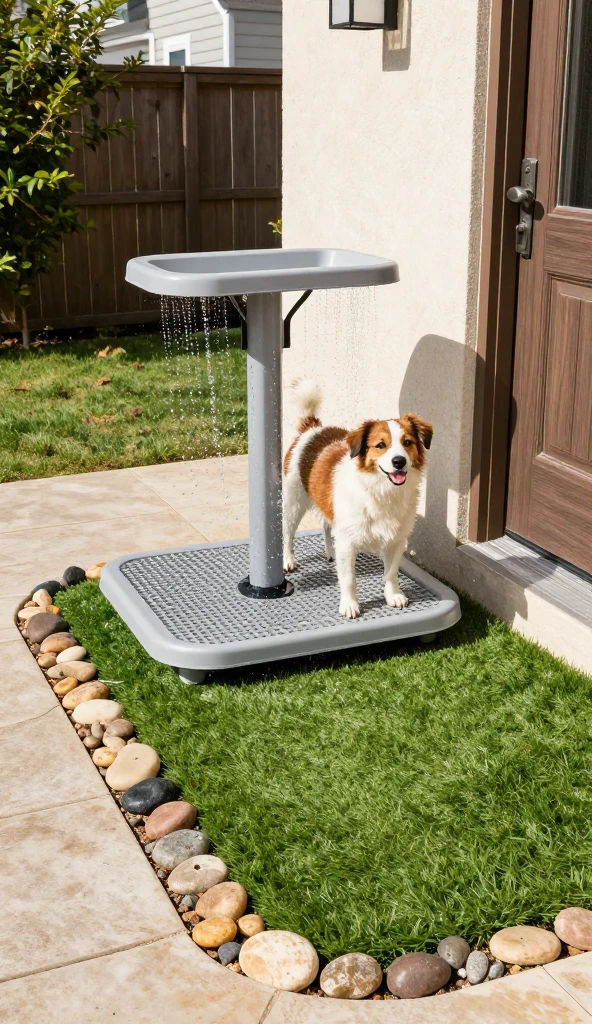
Placing your wash and potty station adjacent to the patio or back entrance means your dog can stop, get rinsed, and dry off before a single muddy paw crosses your threshold. No damp dog smell in the hallway. No trail of prints across the kitchen floor. Just a quick, contained cleanup that happens outside, where it belongs.
A well-placed patio-adjacent setup should include:
- A wash platform with a hose or sprayer mounted close to the wall or fence
- A clearly defined potty area using gravel, decomposed granite, or artificial turf just a step or two from the wash point
- Edging stones or a small fence panel to keep the potty zone visually separate from the rest of the yard
- Non-slip flooring on the wash platform — wet dogs and slippery surfaces are not a good combination
The American Kennel Club recommends ensuring proper drainage in outdoor wash setups to prevent water pooling and keep the area hygienic year-round — something worth building in from the start rather than retrofitting later.
3. The Garden Dog Wash and Potty Corner
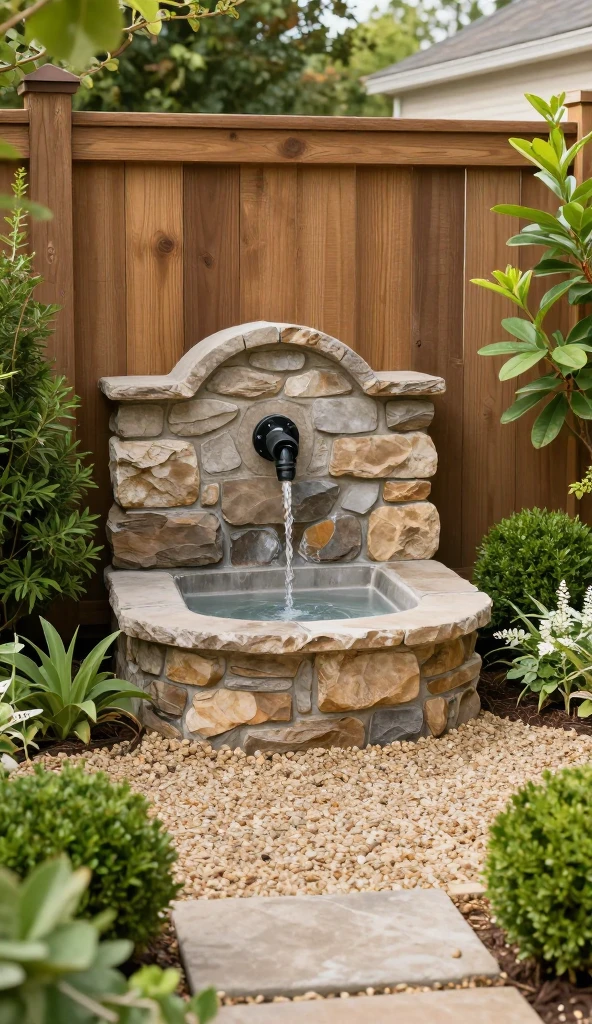
Beauty Meets Practicality
Got more than a postage stamp of outdoor space? A garden-integrated station is one of the most satisfying setups to look at — and to actually use. The idea is to incorporate the wash and potty area into your existing landscaping so it reads as part of the garden, not bolted onto it.
Think a stone or paver wash platform framed by low-maintenance shrubs, with a gravel potty zone enclosed by a small wooden trellis or panel. Done well, guests might not even realise it’s a dog station until Max trots over for his post-walk rinse.
Key design elements for a garden-style station:
- Plants or shrubs framing the space to give it a natural, finished look
- A stone or paver wash platform that complements your existing garden materials
- Gravel or bark mulch in the potty zone for natural drainage and easy cleanup
- Wooden panels or a trellis for a bit of structure and privacy
This works especially well for homes where outdoor entertaining is a regular thing. Your setup looks considered, not chaotic — and that’s the whole point.
4. Compact Dog Wash and Potty Area for Small Yards
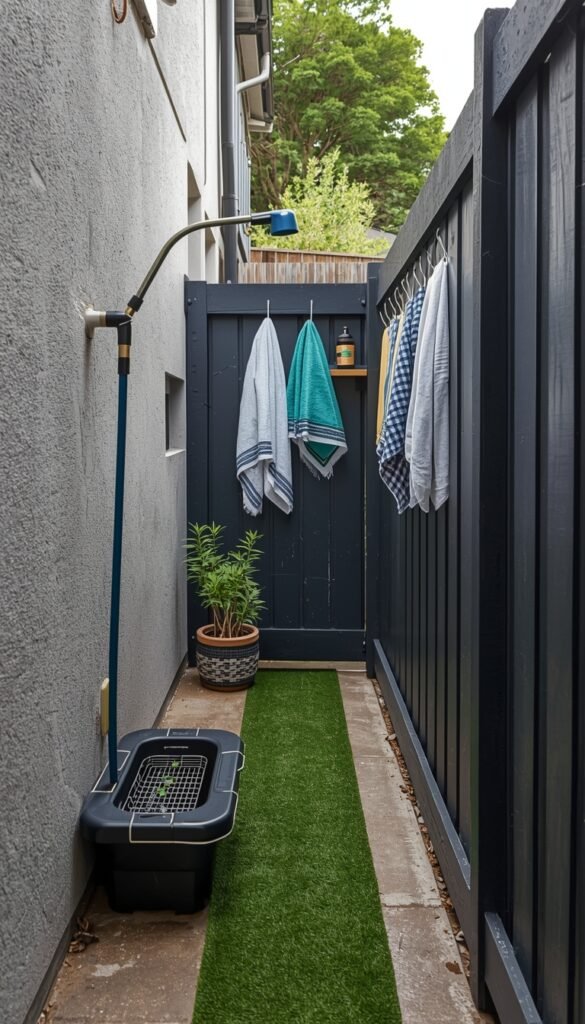
Small Space, Big Results
A small yard is not a reason to give up on a proper dog station. Terraced houses, urban gardens, and narrow side yards can all accommodate a wash and potty setup — it just takes smarter planning and a willingness to think vertically.
The compact approach works by mounting as much as possible to a wall or fence and using the floor space that remains for a narrow potty strip. A 4×6 foot side yard can handle this layout without feeling cramped, especially when the elements are purpose-built for the space.
- Wall-mounted hose reel or sprayer instead of a freestanding basin
- A small folding or flush-wall wash platform for paw rinsing that doesn’t take up permanent floor space
- A narrow artificial turf strip along the fence line for the potty zone
- Wall hooks and a mounted shelf for towels and supplies — keeping the floor completely clear
Small doesn’t mean compromised. It just means efficient. You can find more ideas for fitting dog-friendly features into compact outdoor spaces in our guide to small garden dog-friendly yard ideas.
5. Outdoor Pet Wash Station With Built-In Potty Zone and Storage
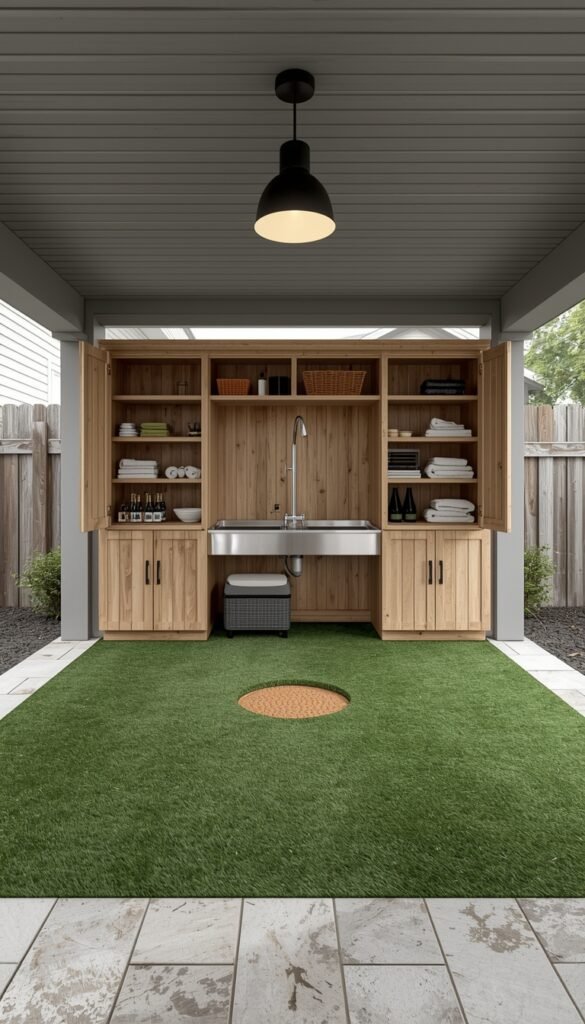
The All-In-One Setup for Multi-Dog Homes
If you have more than one dog, you already know that keeping the outdoor routine organised requires a minor miracle on most days. A larger pet care station with built-in storage is genuinely worth the investment — it turns a chaotic corner of the yard into something that actually functions.
This setup goes well beyond a hose and a patch of gravel. It brings everything together in one place and keeps it there:
- A full wash platform with proper drainage and a handheld sprayer
- A generous turf or gravel potty area positioned just beside the wash station
- Built-in shelves or weatherproof cabinets for towels, brushes, shampoo, and waste bags
- Storage bins for cleaning supplies and extras — refills, sponges, spare leads
Pet Mom Tip: Label your storage bins by dog if you have multiple dogs with different shampoos or grooming needs. It sounds fussy, but when you’re outside in the rain wrestling two muddy dogs, knowing exactly where everything is saves real time — and your temper.
When everything is stored in one dedicated spot, the after-walk routine becomes something close to automatic. With two or more dogs, that repetition adds up to a significant amount of time saved each week.
6. Covered Dog Wash and Potty Station for Rainy Climates
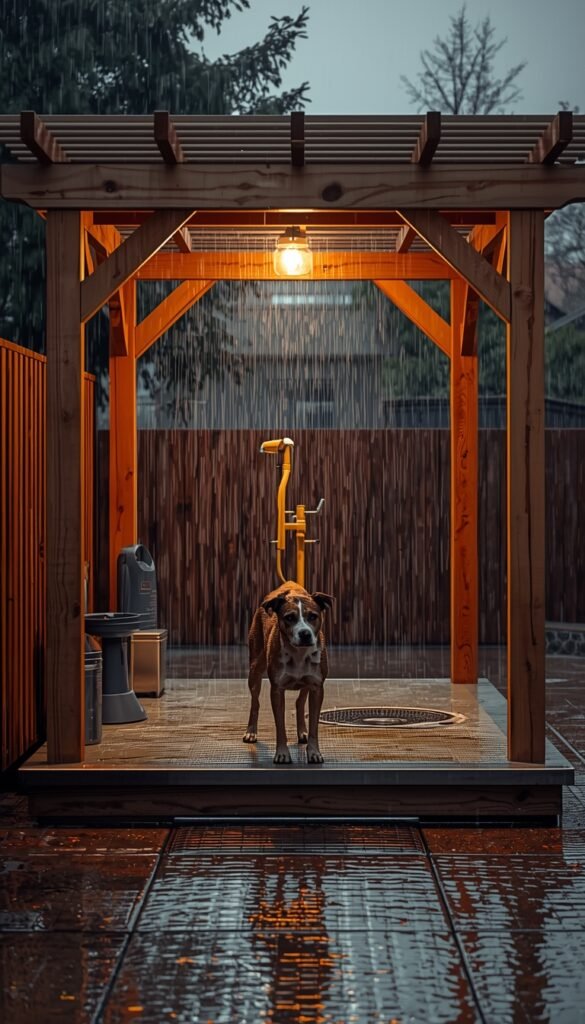
Because Rain Doesn’t Care About Your Schedule
Here’s the reality: your dog doesn’t get a day off because it’s raining. Neither do you. An uncovered wash station on a cold, wet evening becomes something you’ll avoid — and avoidance is how muddy paw prints start appearing all over the house again.
A covered station solves this completely. A pergola, a simple roof extension, or even a quality sail shade over the wash and potty area makes the whole setup usable year-round without any weather negotiation. You hold the hose. The rain stays off both of you. Everyone wins.
What to include in a well-designed covered station:
- A pergola or attached roof extension over both the wash platform and potty area
- Weatherproof lighting for early morning and evening use — crucial in winter months
- A heated outdoor hose or insulated pipe if you’re in a climate that dips below freezing
- Proper drainage channels to handle heavy rain runoff from the roof above
According to the ASPCA, wet and muddy conditions that go unmanaged can contribute to skin irritation and infections in dogs, particularly between the toes and paw pads. A covered station that makes rinsing easier is one of the simplest ways to stay on top of it.
Once you’ve used a covered station through a proper winter, going back to wrestling with a hose in the rain feels genuinely unthinkable.
7. The Hidden Built-In Backyard Dog Potty Area With Wash Station
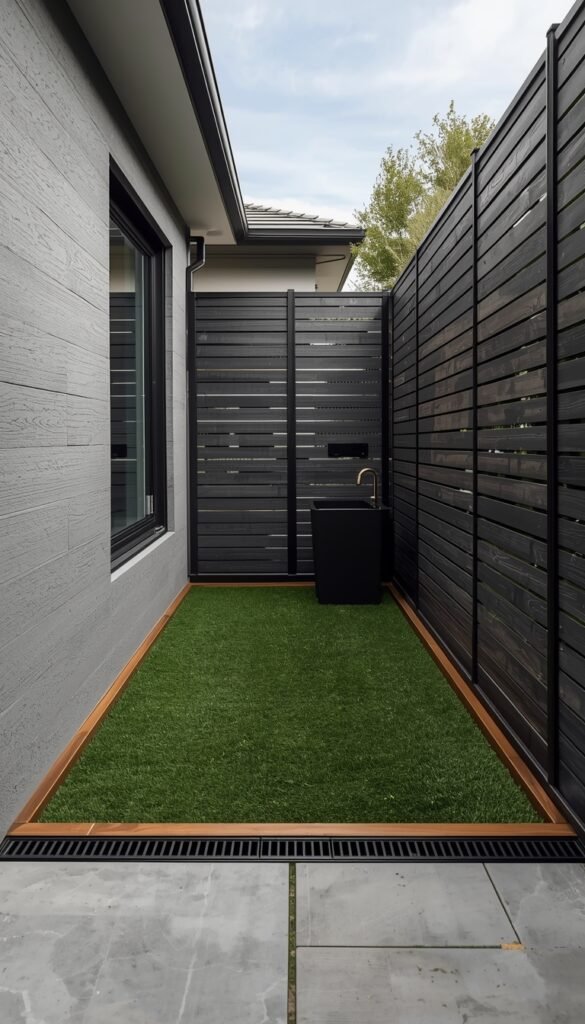
Sleek, Discreet, and Totally Brilliant
Some homeowners want a dog station that does everything it needs to do without announcing itself as a dog station. If you’ve spent time and money making your backyard look a particular way, that’s a completely reasonable priority.
The hidden built-in approach integrates the wash and potty zone into the backyard’s overall design using materials and sightlines that blend rather than interrupt. A flush-mounted floor drain, stepping stone edging, and a low privacy panel beside a fence line can mark out the entire area without it visually dominating the space.
- Gravel, sand, or artificial turf defines the potty zone without looking out of place
- A flush-mounted floor drain in the wash area keeps things clean and uncluttered
- Stepping stones or low wooden edging mark zone boundaries subtly
- The wash station itself tucked behind a low panel or beside a fence, kept out of the main sightline
This design works beautifully alongside patio seating areas. Guests won’t notice the station until Max wanders over, gets a quick rinse, and comes back looking spotless. That’s exactly the idea.
Which Setup Is Right for Your Yard?
Not sure where to start? Use this as a quick reference to match your situation to the right setup:
| Your Situation | Best Setup | Key Feature |
| Small yard or urban home | Compact wall-mounted station | Vertical space, minimal footprint |
| Rainy or cold climate | Covered pergola station | Year-round usability |
| Multiple dogs | All-in-one with built-in storage | Organization + capacity |
| Large garden | Garden corner station | Blends into landscaping |
| Modern backyard aesthetic | Sleek hidden built-in | Discreet, flush-mounted design |
| Entertaining outdoors often | Patio-adjacent station | Close to back door, no muddy floors |
Tips for Getting the Most Out of Your Dog Station
Whatever setup you choose, a few small decisions at the planning stage make a big difference in how well it actually works day to day:
- Get the drainage right from the start. Poor drainage is the number one reason outdoor dog wash stations become unusable. Whether you’re using gravel, a floor drain, or a sloped platform, water needs somewhere to go.
- Choose surfaces your dog can grip. Wet concrete and wet tile are both slippery. Rubber matting, textured stone, or artificial turf give your dog secure footing and make the whole rinse-off process less of a wrestling match.
- Position supplies at adult-human height. Bending down for the shampoo while one hand is on a wet dog is a recipe for frustration. Mount shelves or hooks at a level that keeps everything accessible without breaking your posture.
- Test your hose or sprayer before committing to the setup. Water pressure, reach, and spray pattern all matter. A handheld sprayer with adjustable settings will almost always outperform a fixed nozzle for actual dog-washing use.
- Build in a drying zone. Even a small hook for a towel right beside the wash area, or a spot for a dog-specific drying mat, will save you from carrying a dripping dog through the house while you hunt for something to dry them with.
Your Yard, Your Routine, Your Rules
Muddy paws and chaotic after-walk cleanups don’t have to be a permanent fixture of dog ownership. A well-thought-out outdoor dog wash and potty station gives you back control of that part of the day — and it turns a stressful, improvised scramble into something that just works.
Whether you go all-in with a covered, built-in station or keep it simple with a compact wall-mounted setup, the most important thing is choosing a design that suits your actual yard and your actual routine. A station that fits your life is one you’ll actually use.
Pick the idea that resonates, plan your space carefully, and build it once — properly. Your floors will thank you. Max definitely will too, even if he shows it by immediately going back to roll in something suspicious.